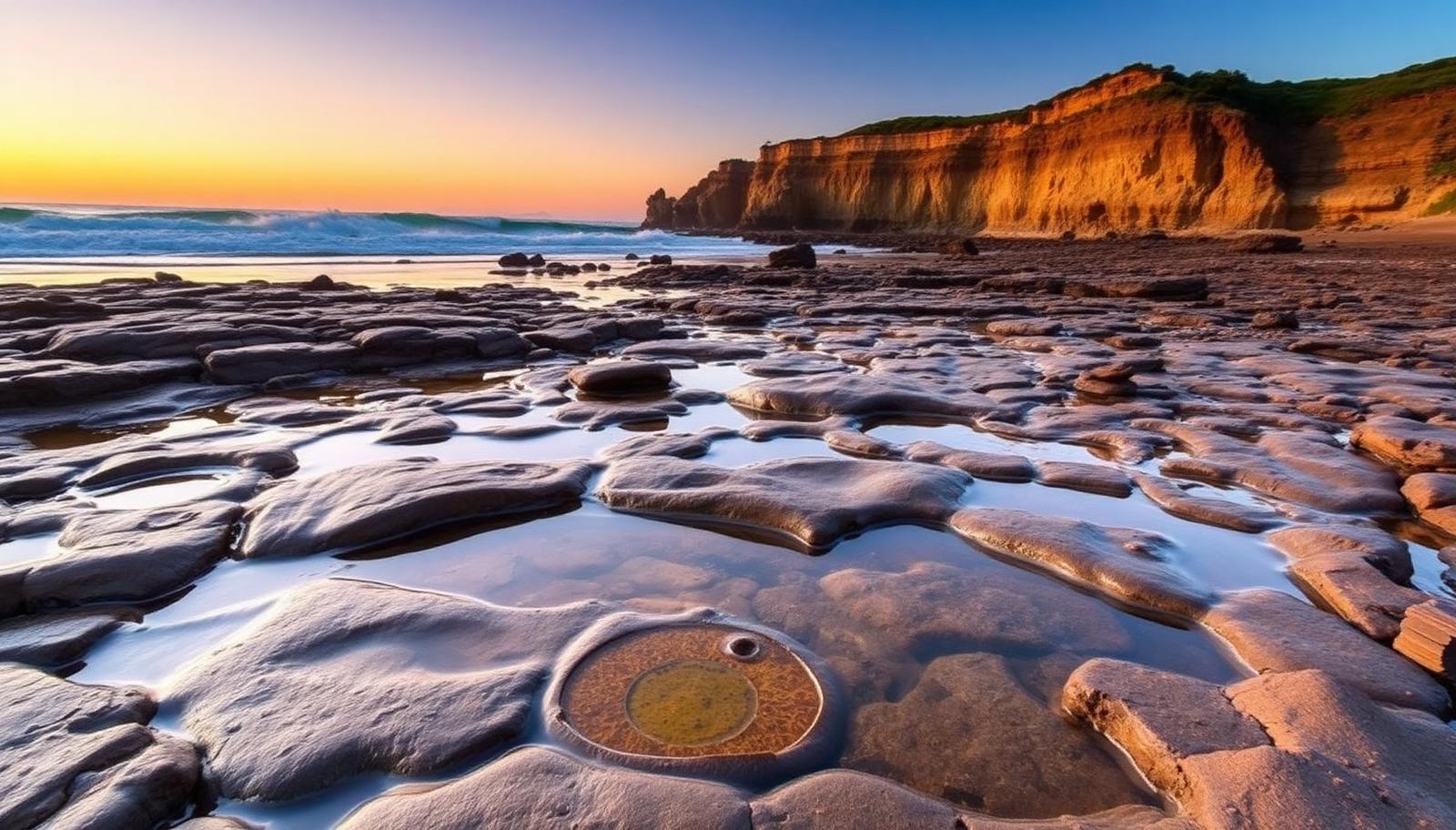
Sunset Cliffs is iconic for its crumbling yellow sandstone bluffs and world-class sunset views. But when the tide drops away, the shelf of rock beneath those cliffs reveals one of the most rugged and diverse tide pooling ecosystems in San Diego. Unlike the flat reefs of La Jolla, Sunset Cliffs offers a more vertical, wild experience.
Sunset Cliffs tide pools at a glance
- Best Tide: Below +0.5 ft (minus tides preferred).
- Best Season: November through March (for daytime low tides).
- Access Difficulty: Moderate. Requires scrambling down steep, often slippery paths or stairs.
- Safety Note: Stay away from cliff edges and avoid the pools if the surf is high (4ft+).
Best access points
The tide pools at Sunset Cliffs aren't a single spot, but a series of rocky benches reachable from several points along the Sunset Cliffs coastline.
- Ladera Street (Main Park Lot): At the very south end of Sunset Cliffs Blvd. A concrete staircase leads down to a large rocky flat. This is the most popular and easiest access point.
- Luscomb's Point: Near the intersection of Sunset Cliffs Blvd and Hill St. You'll see surfers heading down here. The scramble is steeper, but the pools are excellent.
- North End Caves: Near the intersection of Adair St. This area features the famous open-ceiling sea cave (stay out if the tide is coming in) and numerous pocket pools.
Tide windows
Timing is everything. The rocky shelves at Sunset Cliffs are completely submerged at high tide. To see anything, you need a tide below +1.0 ft, but the best exploration happens at +0.5 ft or lower.
Check the Sunset Cliffs tide chart before you head out. For a broader view of the best times this season, see our San Diego tide pooling calendar.
What you'll see
The intertidal zone at Sunset Cliffs is divided into zones. The higher pools are home to hardy species like barnacles, while the lower pools (accessible only at very low tides) house more sensitive creatures.
Species Checklist
- Aggregating Anemones: Squishy-looking circles that close up when dry.
- Hermit Crabs: Look for shells that move surprisingly fast.
- Limpets & Barnacles: The "glue" of the tide pools, stuck fast to the rocks.
- Shore Crabs: Often found scurrying into crevices.
- Woolly Sculpins: Small fish that blend in perfectly with the rocks.
- Sea Stars: Becoming rarer, but still spotted in the deep channels.
- Nudibranchs: Brightly colored sea slugs (Sea Hares are common here).
For more on identifying these creatures, read our Ultimate Tide Pooling Guide.
Bluff & surf safety
Sunset Cliffs is beautiful but dangerous. The bluffs are composed of soft sandstone that can break away at any time.
- Stay on established paths: Do not step over railings or stand on the very edge of the bluffs.
- Never turn your back on the ocean: Sneaker waves can wash over the rocky shelves even at low tide.
- Wear grip: The green algae on the rocks is like ice. Wear shoes with good traction (like Tevas or old sneakers), never go barefoot.
Parking
Parking can be the hardest part of the visit. The main lot at the end of Ladera Street is your best bet, but it fills up fast. You can also find street parking along Sunset Cliffs Blvd, but pay close attention to signs as many areas are "no parking" to allow for emergency vehicle access.
If the lots are full, check our interactive map for nearby street parking options.
Tide-pool etiquette
This is a protected marine area. To keep the pools healthy for everyone:
- Look, don't touch: Oils from your skin can harm the animals.
- Watch your step: Every step you take is potentially on a living organism. Walk on bare rock whenever possible.
- Leave no trace: Take your trash with you, and never take shells or animals home.
Compare these pools with other spots in our guide to the Best San Diego Tide Pools or follow our Ultimate Tide Pooling Route.
Frequently Asked
- When is the best time to visit Sunset Cliffs tide pools?
- The best time is during a 'minus tide' (tide level below 0.0 ft), typically occurring during new or full moons. Winter months often bring the lowest daytime tides, making it the prime season for tide pooling in San Diego.
- Are Sunset Cliffs tide pools dangerous?
- They can be. The sandstone bluffs are unstable and prone to collapse, and the wet rocks are extremely slippery. Always watch the ocean for 'sneaker waves' and never turn your back on the surf.
- What animals live in the Sunset Cliffs tide pools?
- Common residents include aggregating anemones, hermit crabs, limpets, barnacles, shore crabs, and small fish like woolly sculpins. If you're lucky, you might spot an octopus, a sea star, or a colorful nudibranch.
- Where do you park for Sunset Cliffs tide pools?
- The most convenient parking is at the Sunset Cliffs Natural Park main lot (at the end of Ladera St) or along Sunset Cliffs Blvd near Luscomb's Point. Parking is free but fills up quickly on weekends and during sunset.
- Can you touch the tide pool animals at Sunset Cliffs?
- It is best not to touch. The organisms are fragile, and many have protective coatings or stings. If you must touch, use a single wet finger and do not poke or pry animals off the rocks. Never remove anything from the pools.