Beach Guide
San Diego Beaches Guide
San Diego's coast runs for roughly 70 miles, from the Mexican border at Imperial Beach to the wave-cut bluffs of Oceanside in North County. In between are some of the most varied beaches in California — flat family-friendly sand at Coronado, the kelp-fringed coves of La Jolla, the endless boardwalk at Mission Beach, and the dramatic sandstone cliffs at Torrey Pines and Sunset Cliffs. No two stretches feel the same, and that's the point.
This guide is written from the sand up. We've profiled 21 of San Diego County's best beaches — from Imperial Beach at the Mexican border all the way up to the Oceanside Pier, plus a longboarder's pilgrimage to San Onofre just over the Orange County line. Scroll into the in-depth profiles for everything you need to plan a real visit: parking realities, lifeguard coverage, water conditions, amenities, and the small insider tips that make the difference between a great day and a stressful one.
San Diego's beach culture is shaped by its mild, dry climate. Water temperatures peak near 70°F in late summer and bottom out around 58°F in February. The famous "June Gloom" marine layer can keep mornings grey well into July — afternoons usually clear by 1–2pm. Pack a light layer even on hot days; the breeze off the Pacific is cooler than tourists expect. Before any south-county swim, it's worth a quick check on San Diego water quality and current beach advisories. Before you drive, scan today's beach conditions and the San Diego tide chart — a minus tide doubles the walkable sand and opens the tide pools.
Sun & Sand
San Diego Beaches
From hidden coves to wide-open stretches of golden sand, every beach tells a different story. Find your perfect shoreline.
Showing 35 of 35 beaches
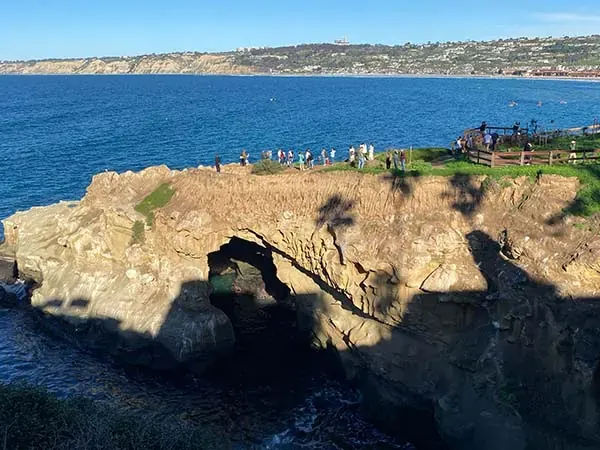
La Jolla Cove
Dive into crystal-clear waters teeming with leopard sharks and garibaldi, explore ancient sea caves by kayak, and share the shoreline with playful sea lions at this jewel of the coast.
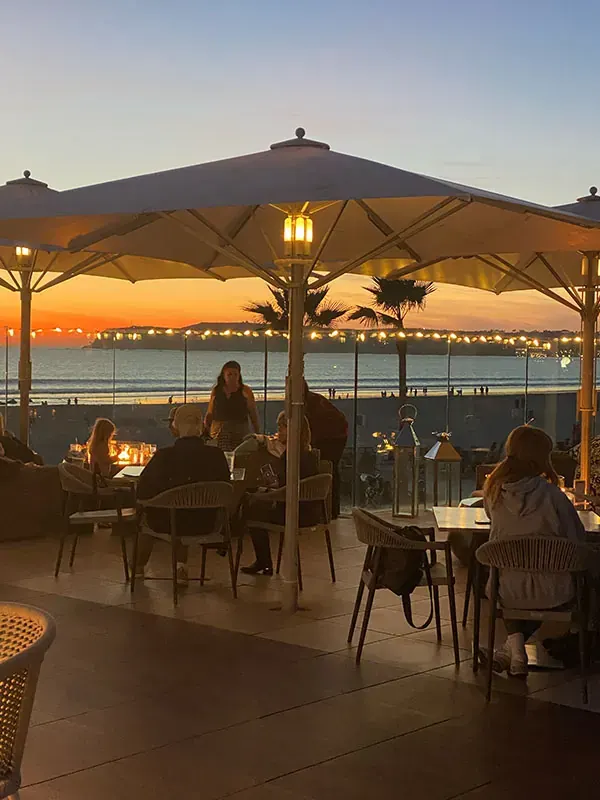
Coronado Beach
Miles of wide, glittering golden sand stretch beneath the iconic red turrets of the Hotel del Coronado — consistently ranked among America's best beaches.
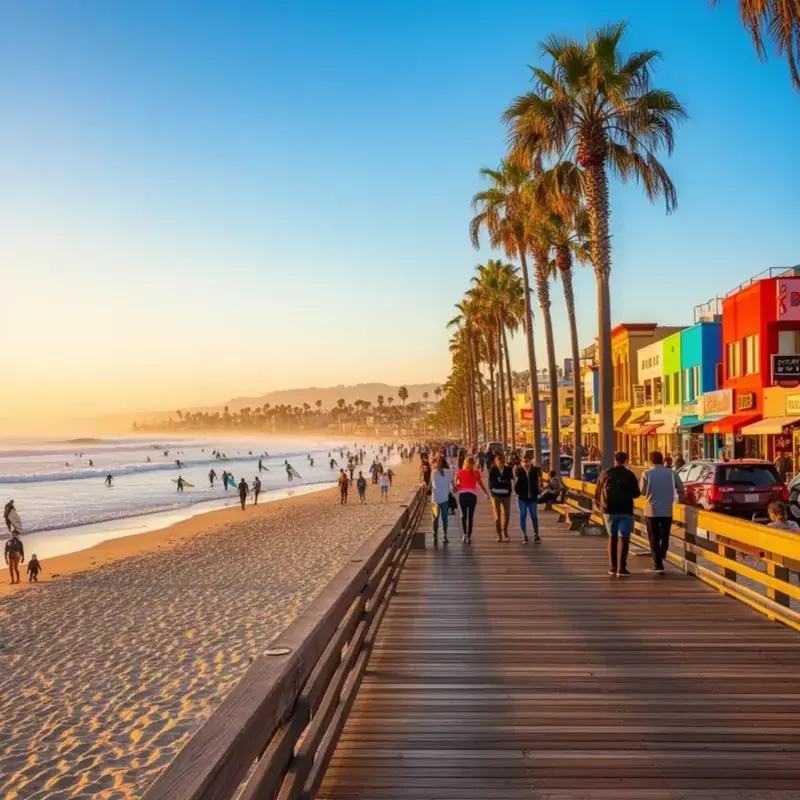
Pacific Beach
Sun-soaked boardwalk buzzing with surfers, beach bars, and nonstop energy — this is quintessential Southern California living at its most vibrant.
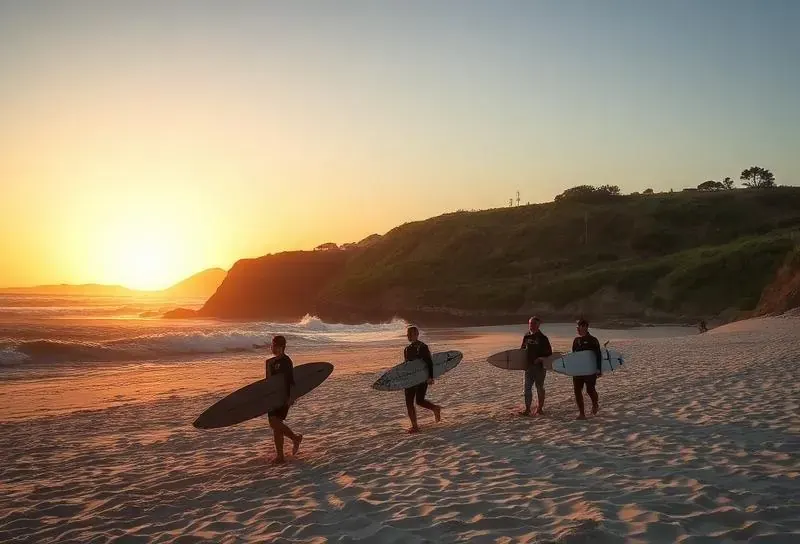
Tourmaline Surfing Park
San Diego's only surf-only city beach — a longboard mecca tucked under the La Jolla bluffs, where free parking, mellow waves, and a no-swimmers lineup make for the most welcoming surf scene in town.
Ocean Beach
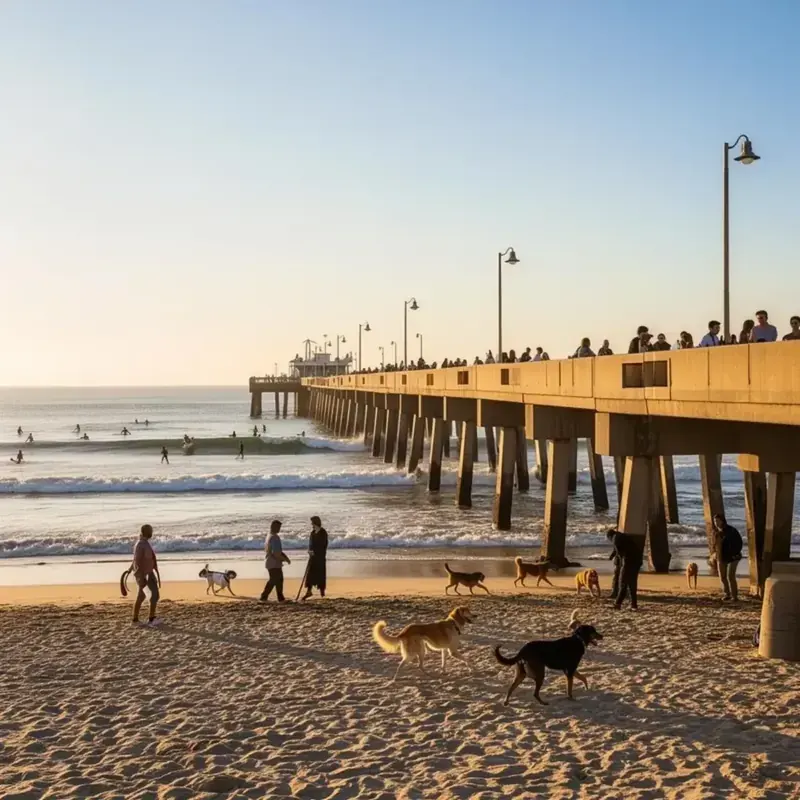
Bohemian spirit, the longest concrete pier on the West Coast, and San Diego's most dog-friendly shoreline — OB is gloriously untamed.
Mission Beach
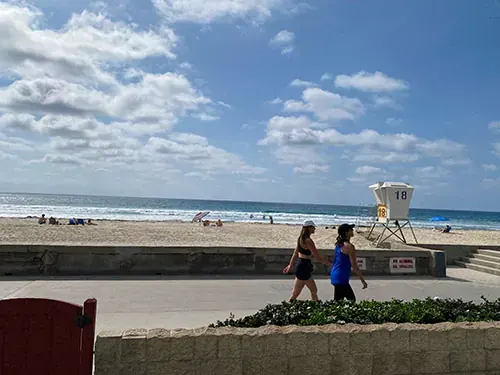
Roller coasters roar over the sand at Belmont Park while volleyball games and bonfire pits keep the beach-party energy cranked year-round.
Windansea Beach
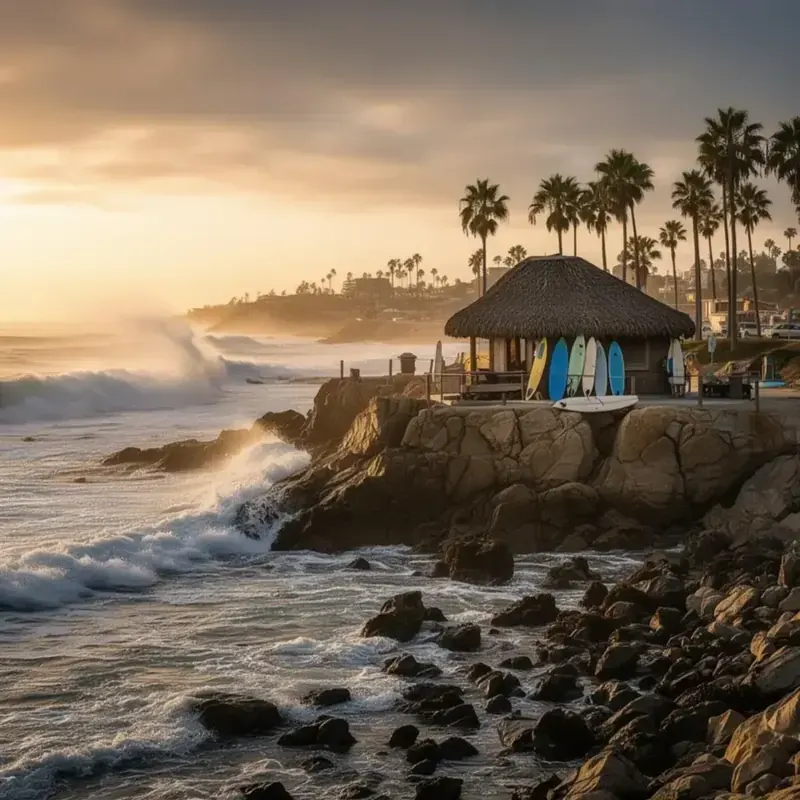
A legendary surf break tucked beneath rocky reefs and a palm-thatched shack — La Jolla's rugged hidden gem where locals come to ride world-class waves.
 Reserve & trails closed
Torrey Pines State Beach
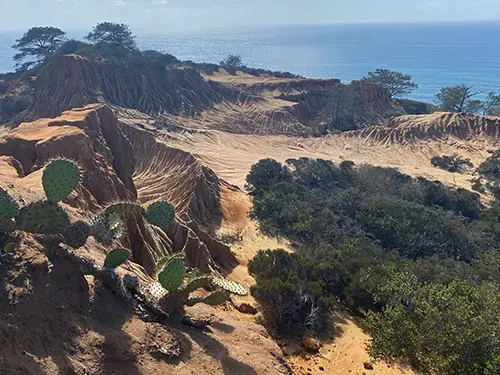
The beach and its North and South lots remain open beneath dramatic sandstone cliffs; the reserve, trails, road, Lodge, and upper lots are temporarily closed.
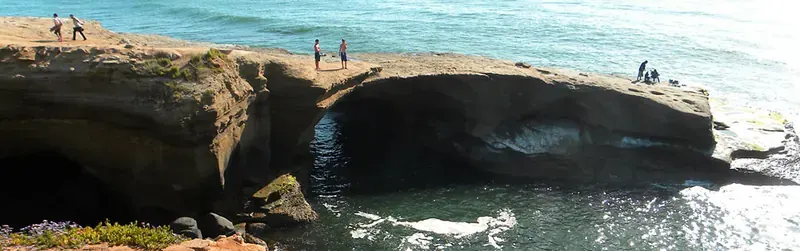
Sunset Cliffs
Rugged bluffs, tide pools, and the most jaw-dropping sunsets in San Diego — grab a blanket, find your ledge, and watch the sky explode in color.
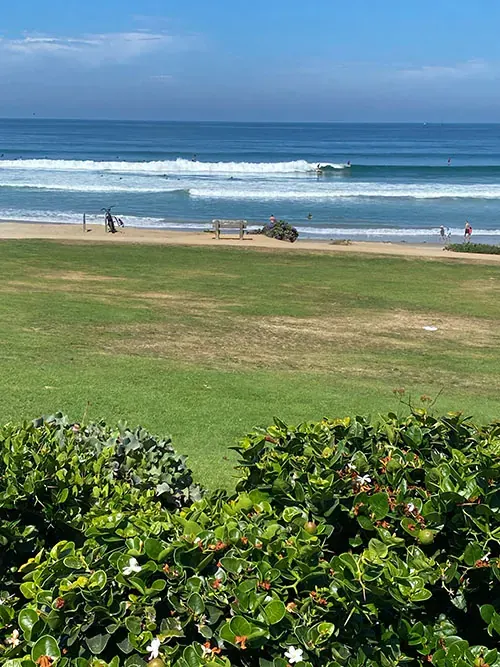
Powerhouse Park – Del Mar
A grassy blufftop park spilling down to a pristine stretch of sand — catch a sunset picnic, stroll to charming Del Mar village, and feel the laid-back North County magic.
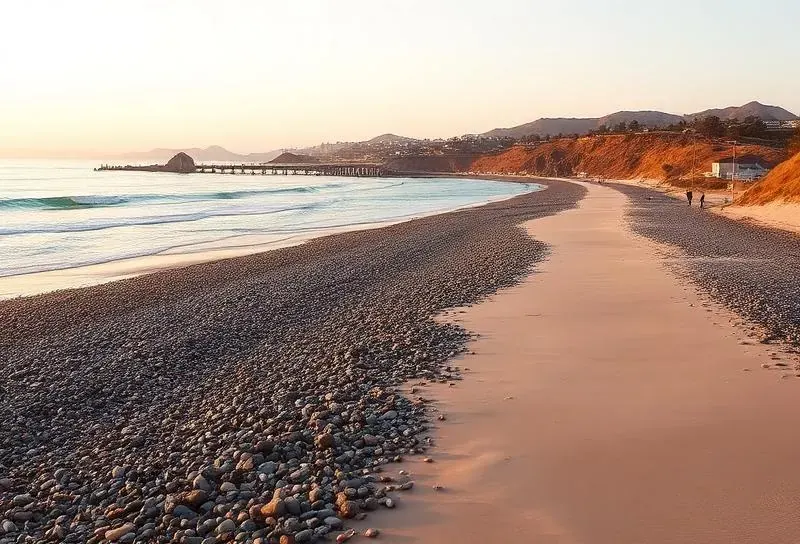
Cardiff Reef
Just south of Swami's, a long, forgiving reef break with a wide cobble-and-sand beach, a state-park lot across from the lagoon, and one of North County's best post-surf dining strips a few steps away.
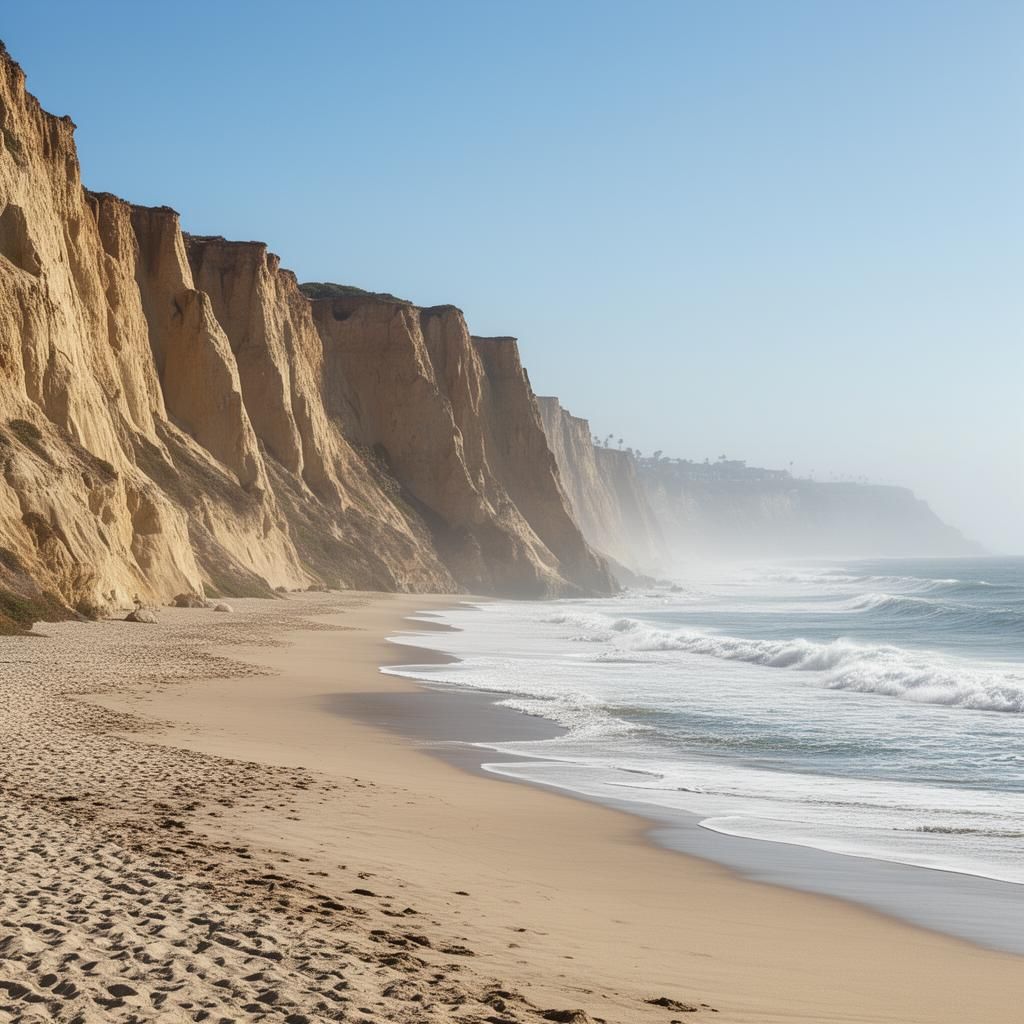
Blacks Beach
San Diego's most dramatic coastline — towering 300-foot cliffs shelter a secluded stretch famous for world-class surf, paragliders soaring overhead, and raw, untouched beauty.
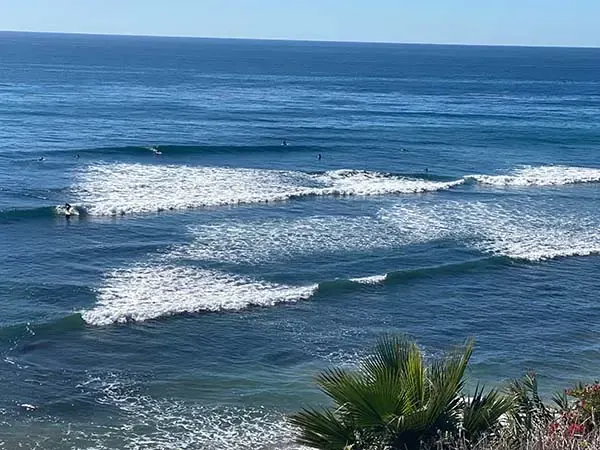
Swami's Beach
A legendary right-hand reef break beneath the gold-domed Self-Realization Fellowship — Encinitas's most photographed surf spot, with tide pools, a long staircase, and one of North County's most iconic shorelines.
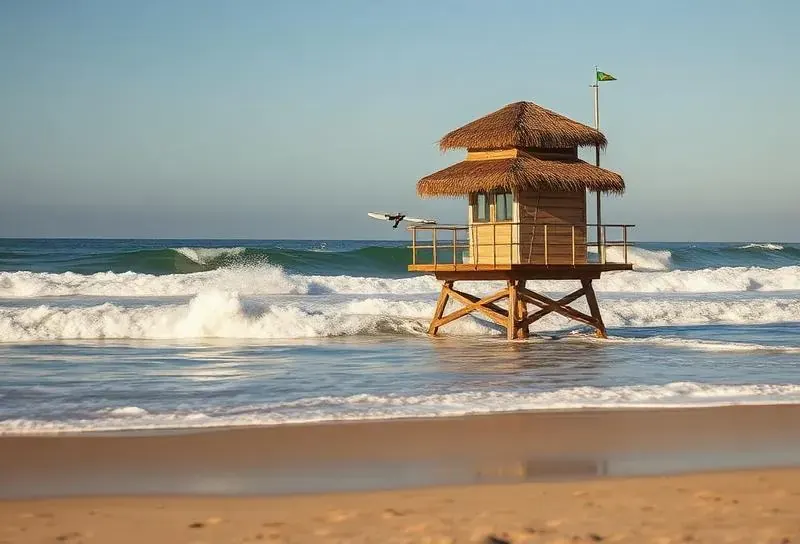
San Onofre — Old Man's
The spiritual home of California longboarding — a mellow point break inside San Onofre State Beach, an hour north in San Clemente, where the wave rolls forever and the lineup feels like a fifty-year-old family reunion.
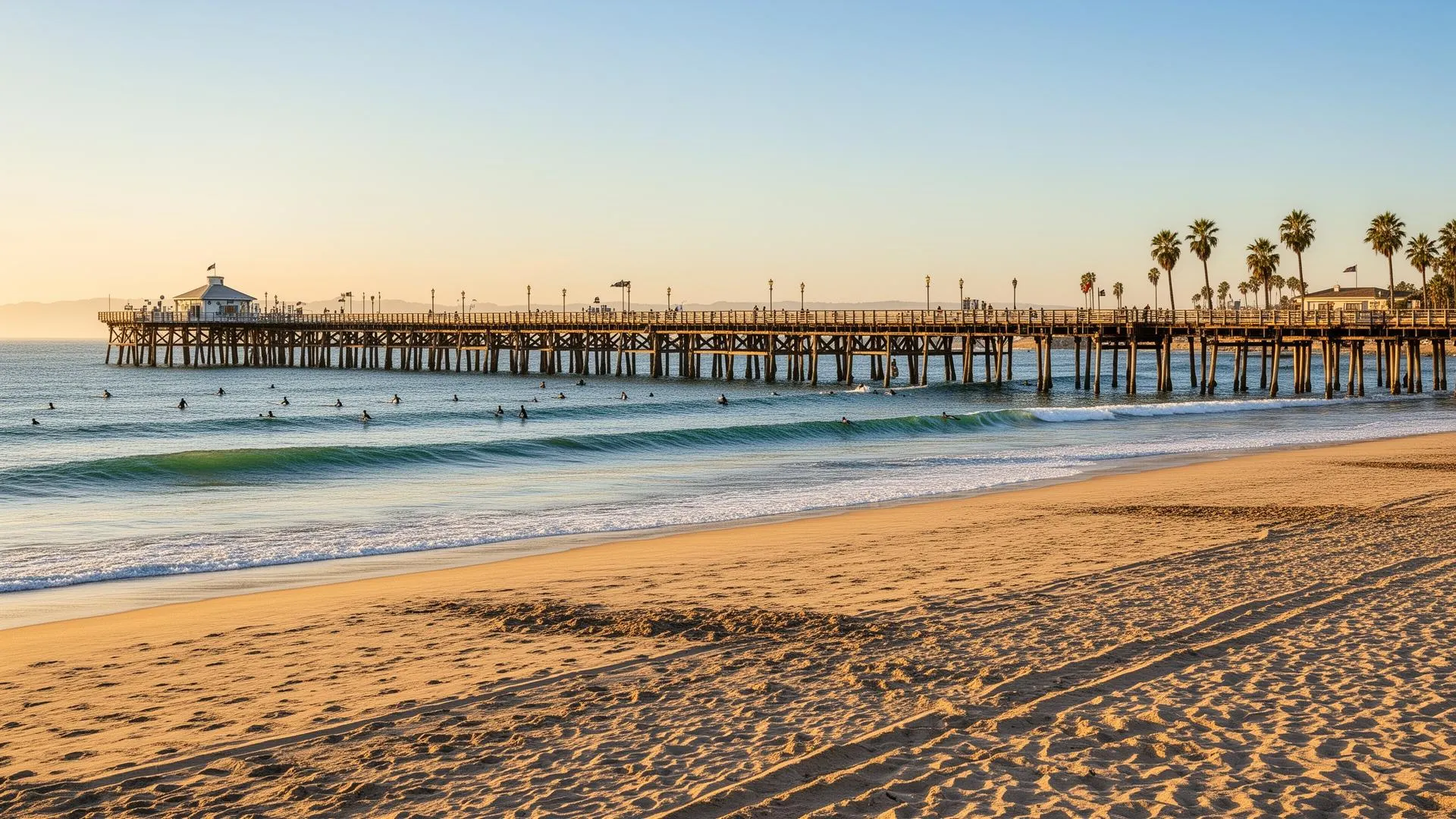
Oceanside Pier & Beach
North County's iconic wooden pier stretches nearly 2,000 feet over the Pacific — a classic surf town with wide sandy beaches, easy parking, and one of the most photographed shorelines in California.
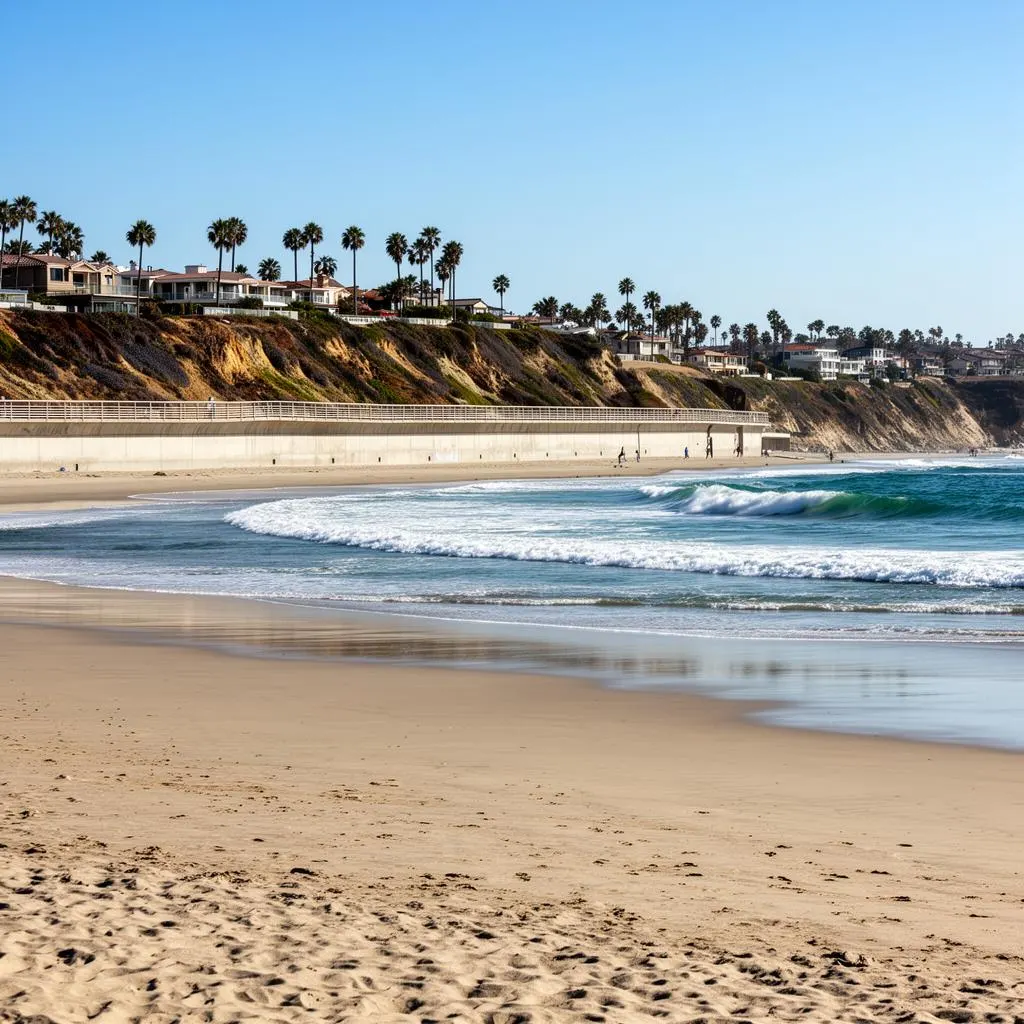
Carlsbad State Beach (Tamarack)
A bluff-top boardwalk runs above a wide, mellow stretch of sand — Carlsbad's most accessible beach, with easy parking, gentle surf, and unbeatable winter storm-watching from the seawall.
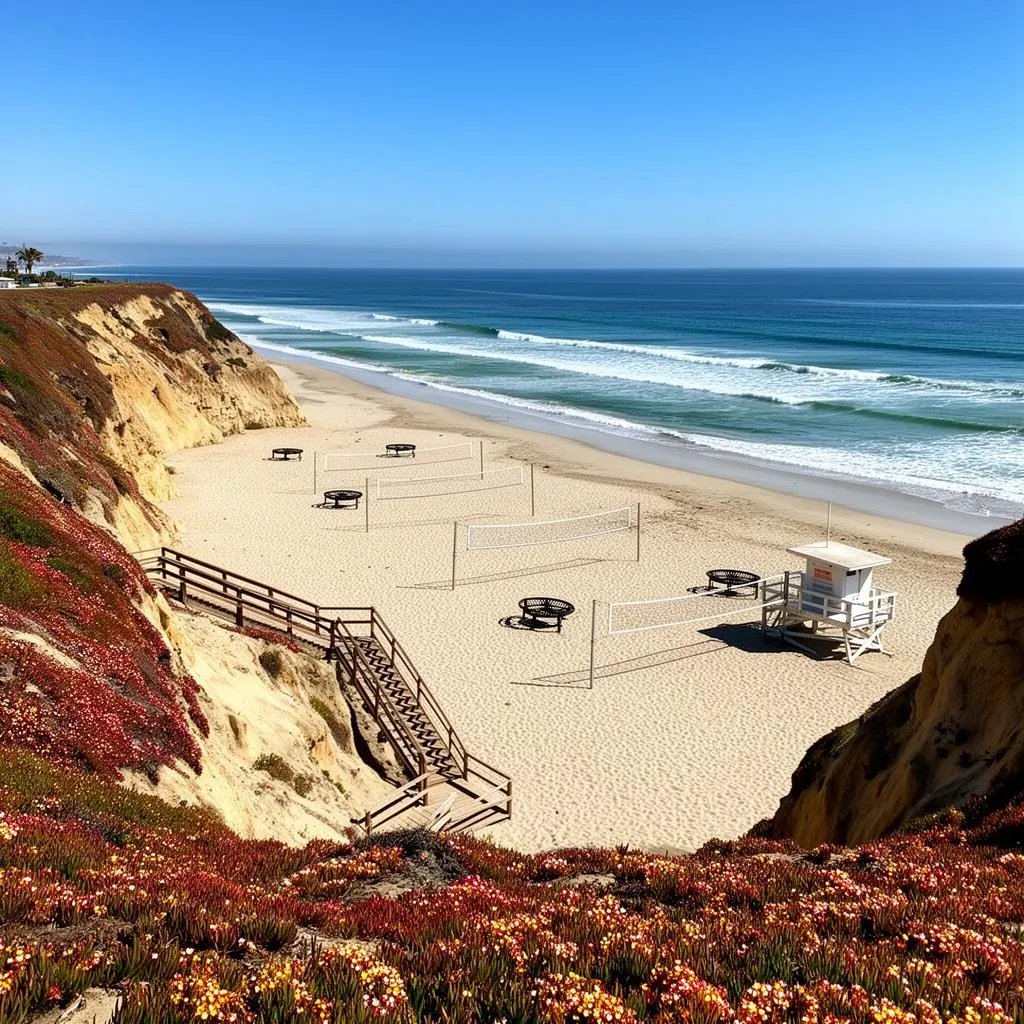
Moonlight Beach
Encinitas's beloved family cove — volleyball nets, fire pits, a snack bar, and a wide sandy beach framed by sandstone bluffs. The most welcoming beach day in North County.
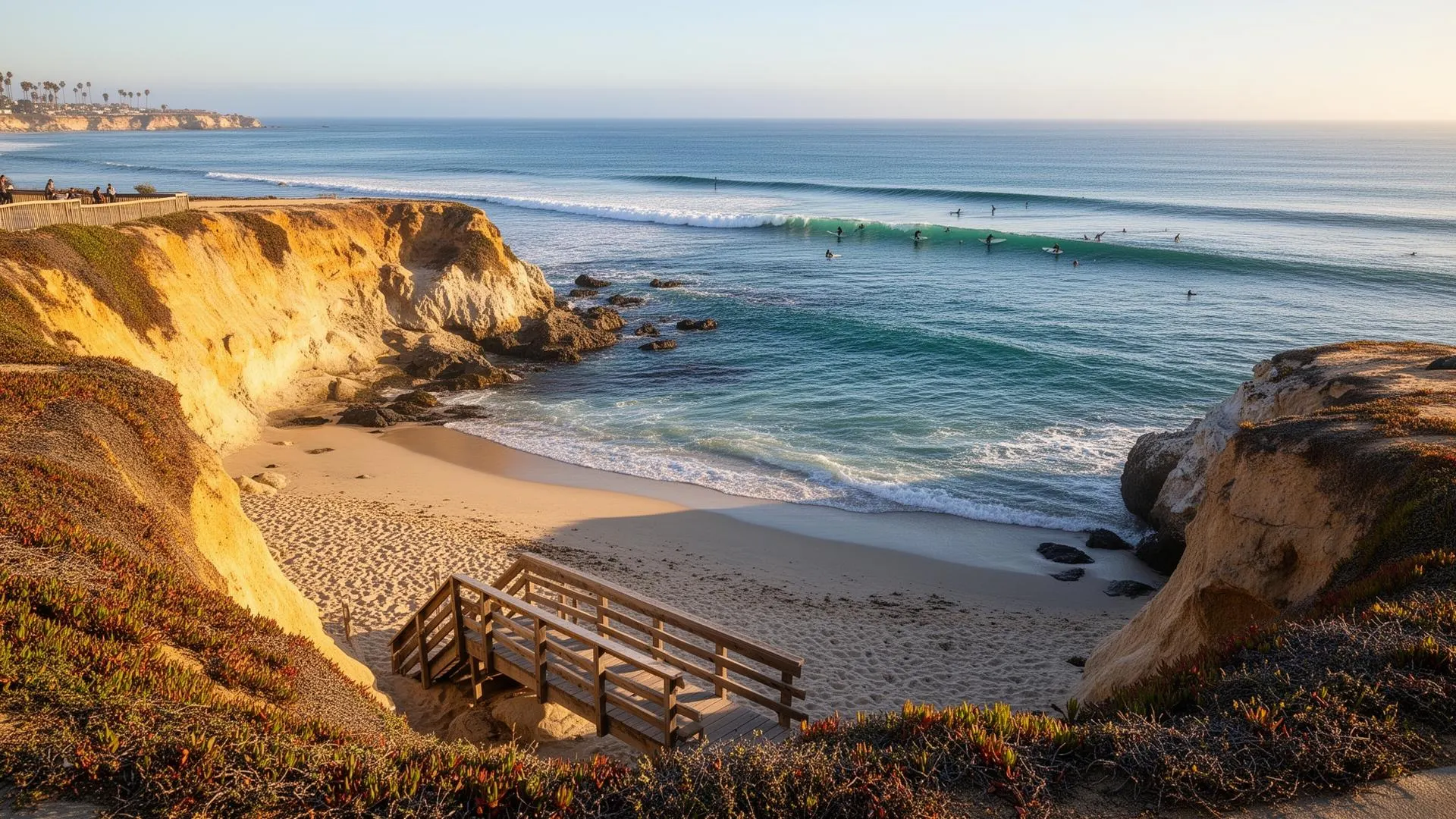
Fletcher Cove
A small, scenic Solana Beach cove tucked between sandstone cliffs — a quiet local favorite with a blufftop park, gentle waves, and far fewer crowds than the bigger North County beaches.
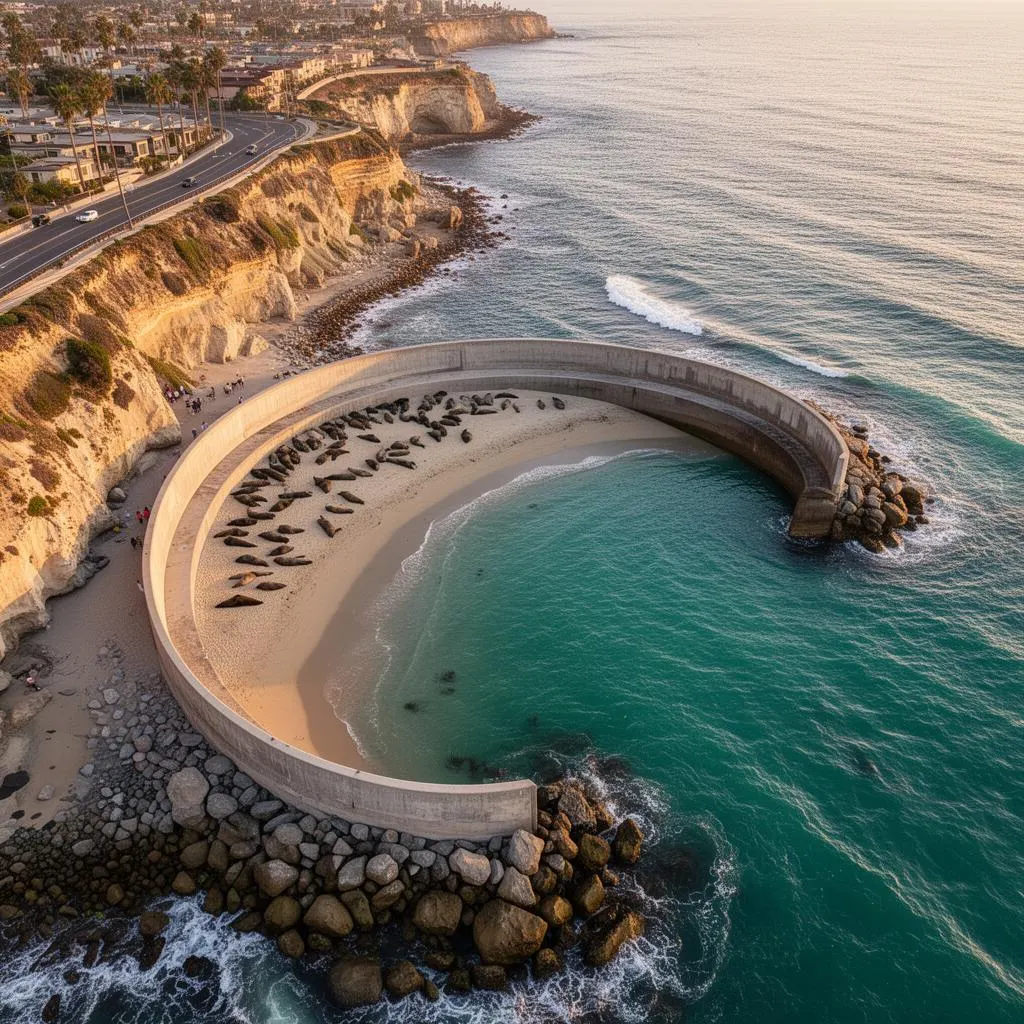
La Jolla Children's Pool
An iconic curved seawall built in 1931 now shelters a colony of harbor seals and sea lions — La Jolla's most beloved wildlife viewing spot, with a paved overlook just steps from the village.
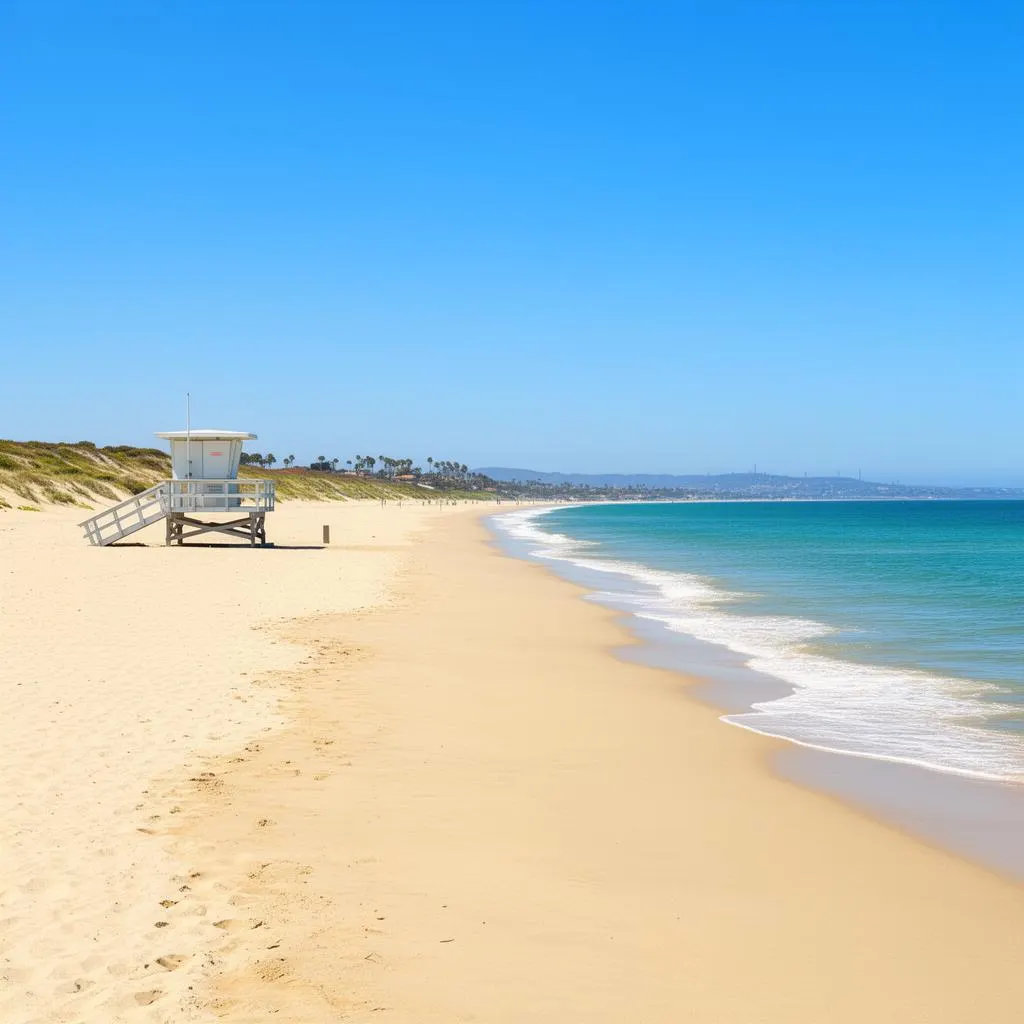
Silver Strand State Beach
A long, flat ribbon of sand between Coronado and Imperial Beach — gentle surf, both ocean and bayside access, RV camping, and the calmest family-friendly water in San Diego.
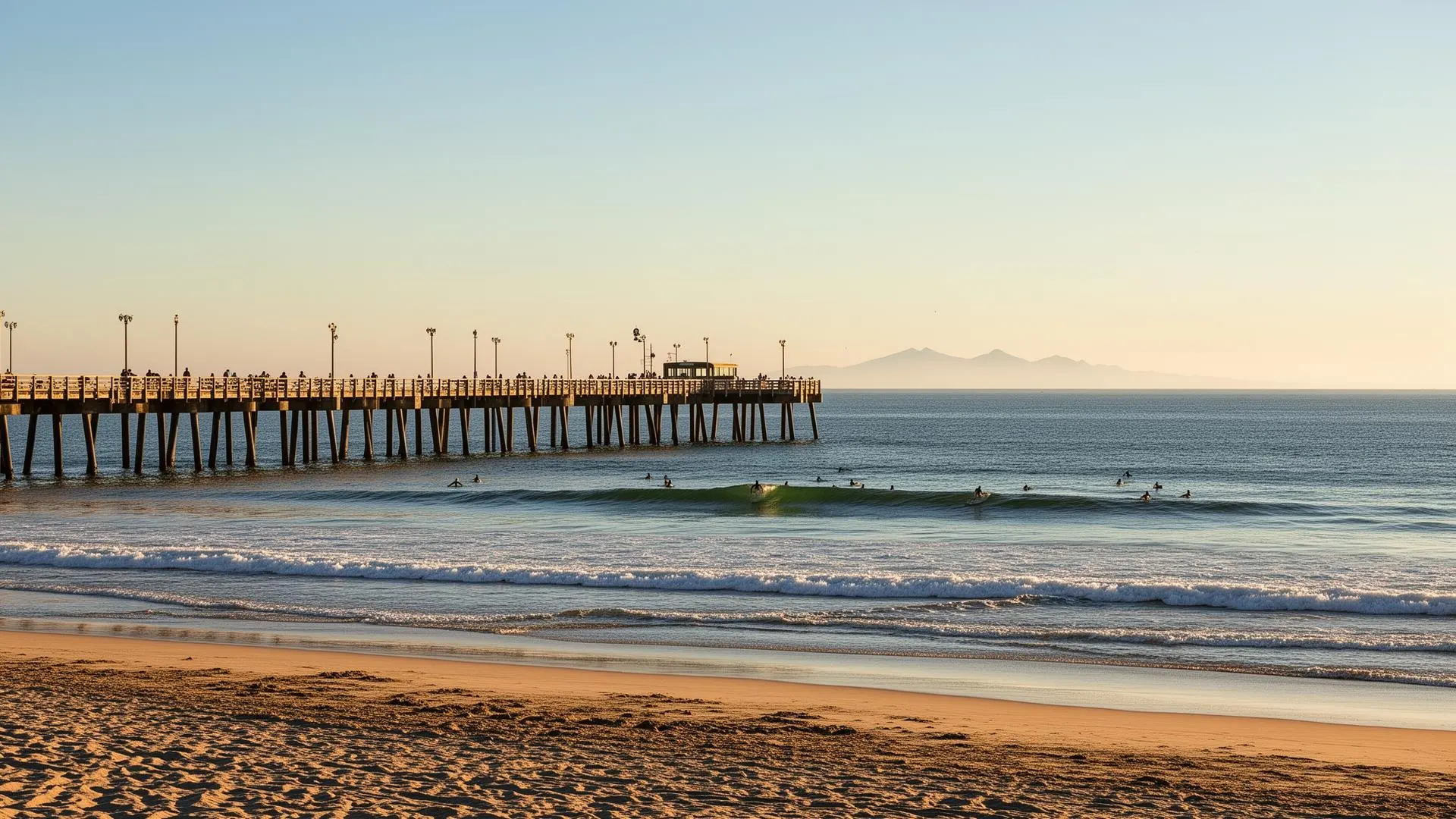
Imperial Beach
California's southernmost beach town, anchored by a classic wooden pier and famous for its summer Sun & Sea sand-castle festival — a friendly, unpretentious surf community at the edge of the country.
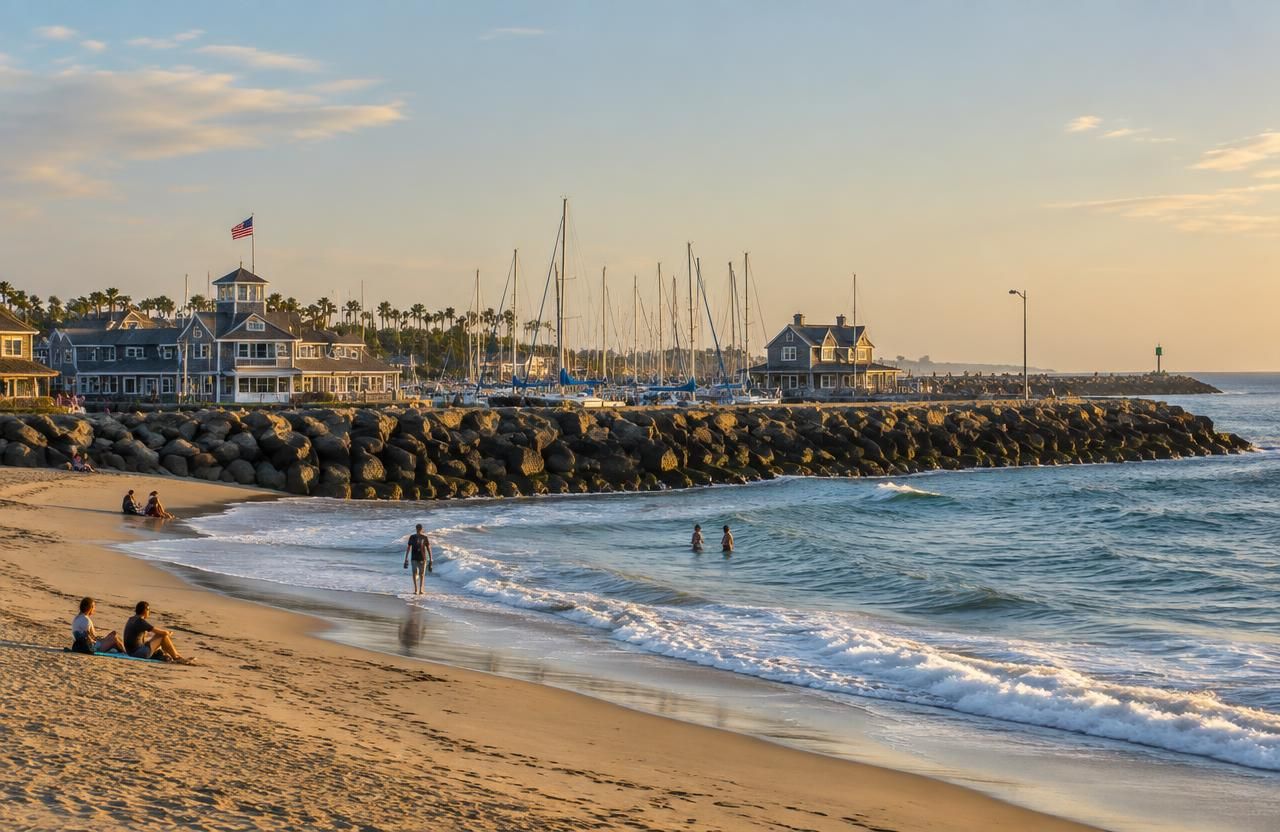
Oceanside Harbor Beach
Tucked between the north jetty of Oceanside Harbor and the pier-side neighborhoods to the south, Harbor Beach is Oceanside's most complete beach day: a wide, sandy shore with fire rings, volleyball, restrooms and showers, all a short walk from the harbor's Cape Cod–style shops, fish markets and charter boats.
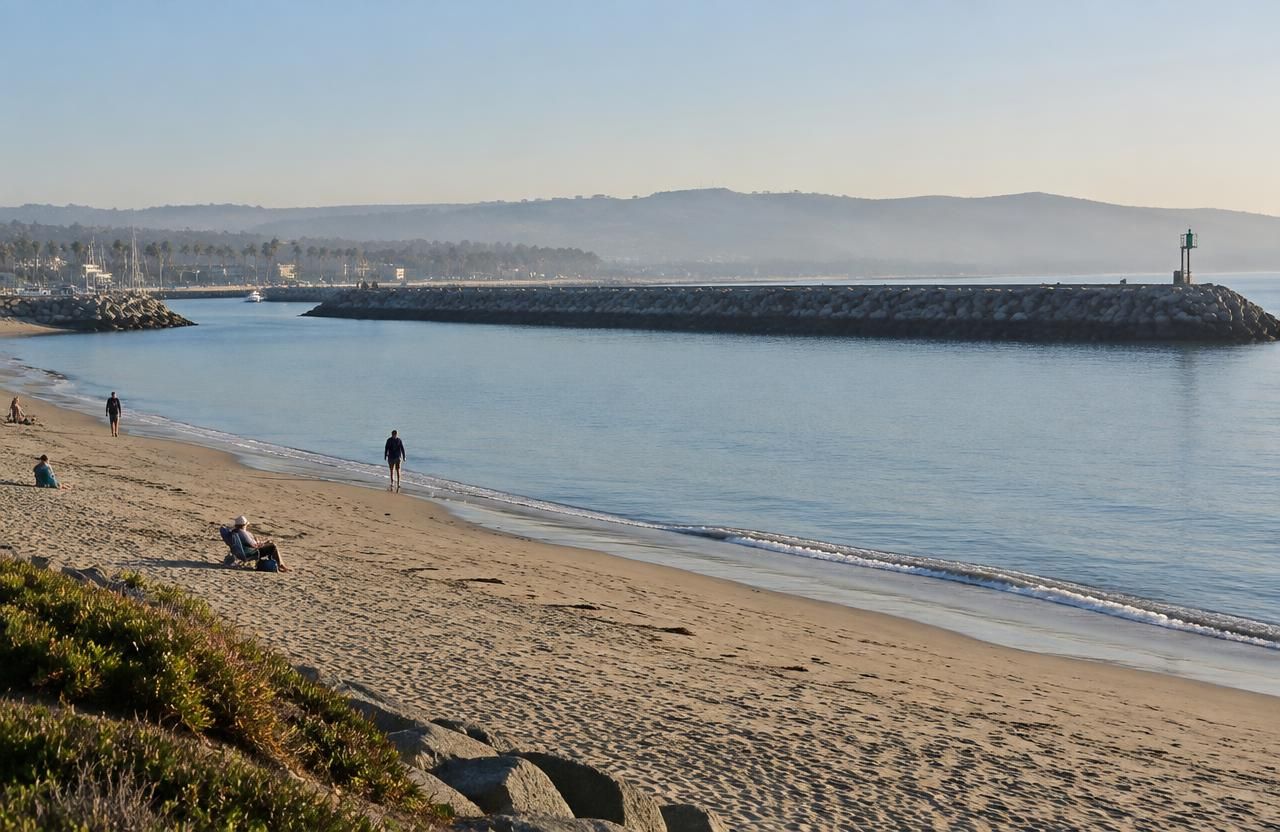
Breakwater Way Beach
Breakwater Way runs along the north side of Oceanside Harbor, and the stretch of sand beside it is one of the calmest, least-crowded beaches in the city. Long rock breakwaters shelter the shoreline, so on most days the water is glassy and gentle — a favorite for early walks, paddleboard launches and quiet afternoons with a book.
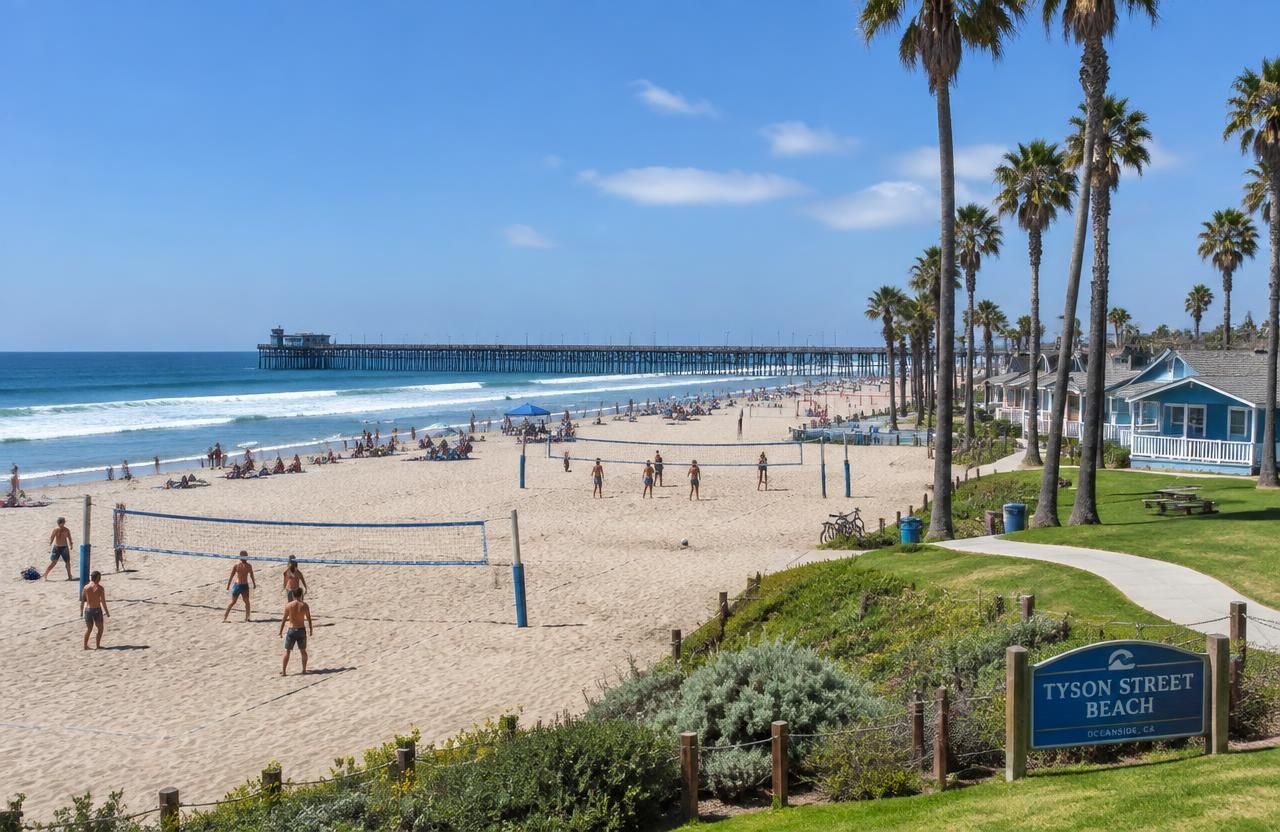
Tyson Street Beach
Just south of the Oceanside Pier, Tyson Street Beach is where downtown Oceanside goes to play: volleyball nets, a small grassy park, picnic tables, and a wide sweep of sand with the pier framing the view.
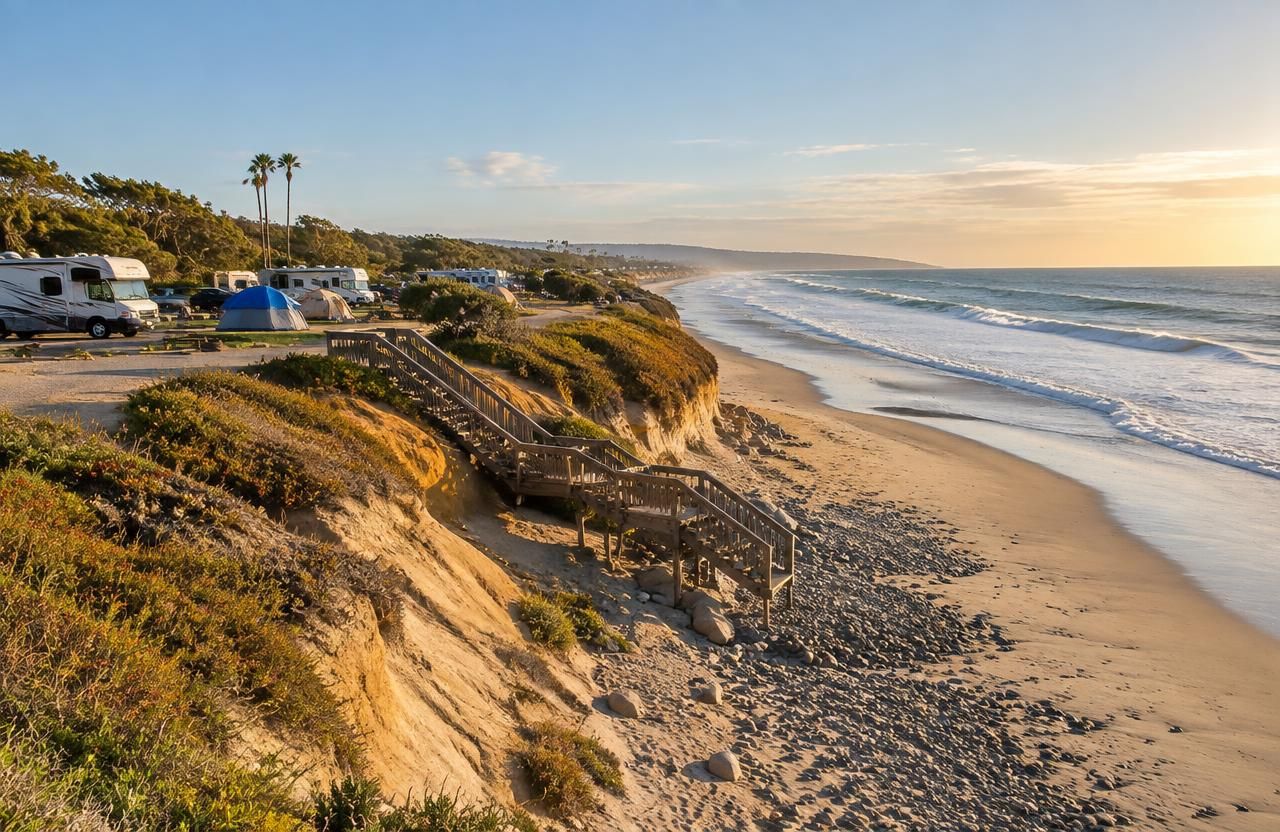
South Carlsbad State Beach
South Carlsbad State Beach stretches for miles below a low bluff lined with one of California's most sought-after oceanfront campgrounds. Stairways drop from the campground to a long, uncrowded beach of sand and cobbles with consistent surf and huge sunsets.
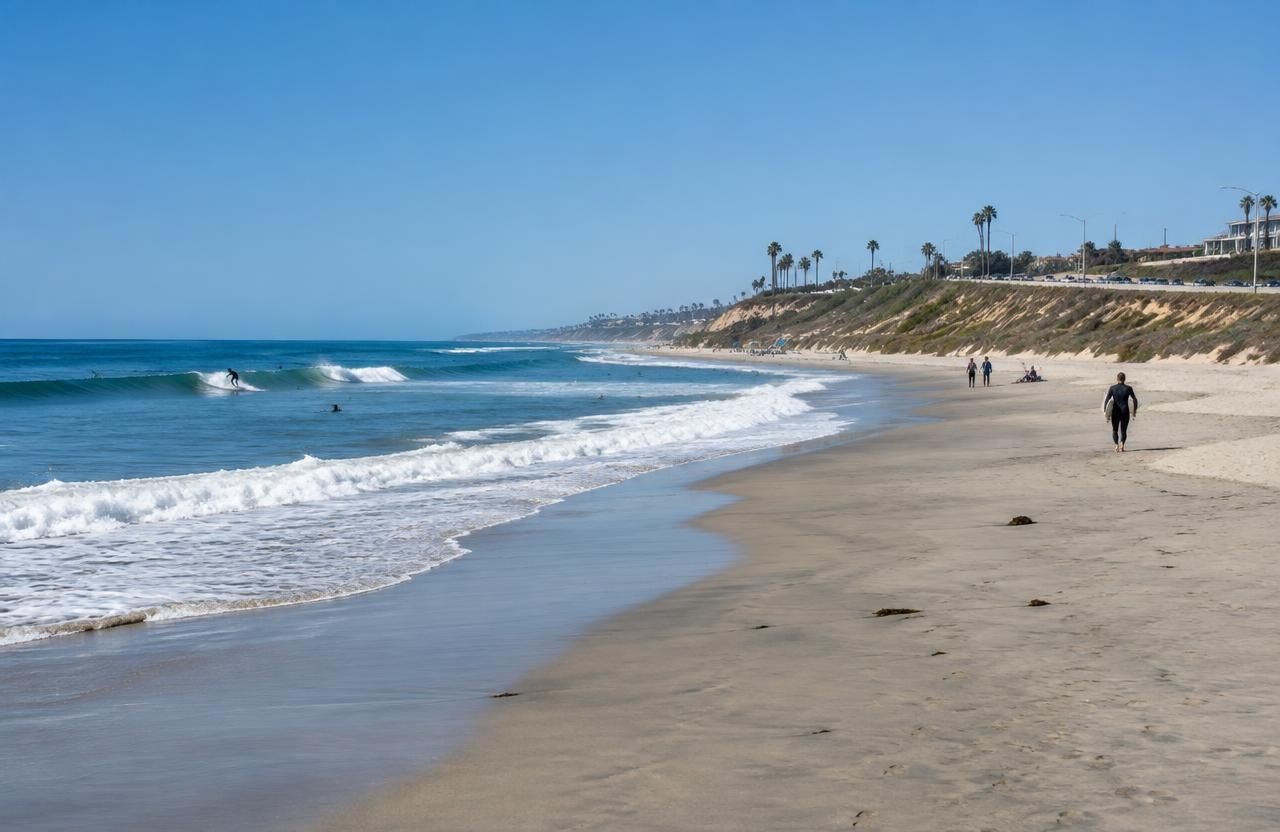
North Ponto Beach
North Ponto is the day-use heart of South Carlsbad State Beach — a broad, flat stretch of sand with a big parking lot right behind it, restrooms, showers and a mellow vibe that makes it one of North County's easiest beach days.
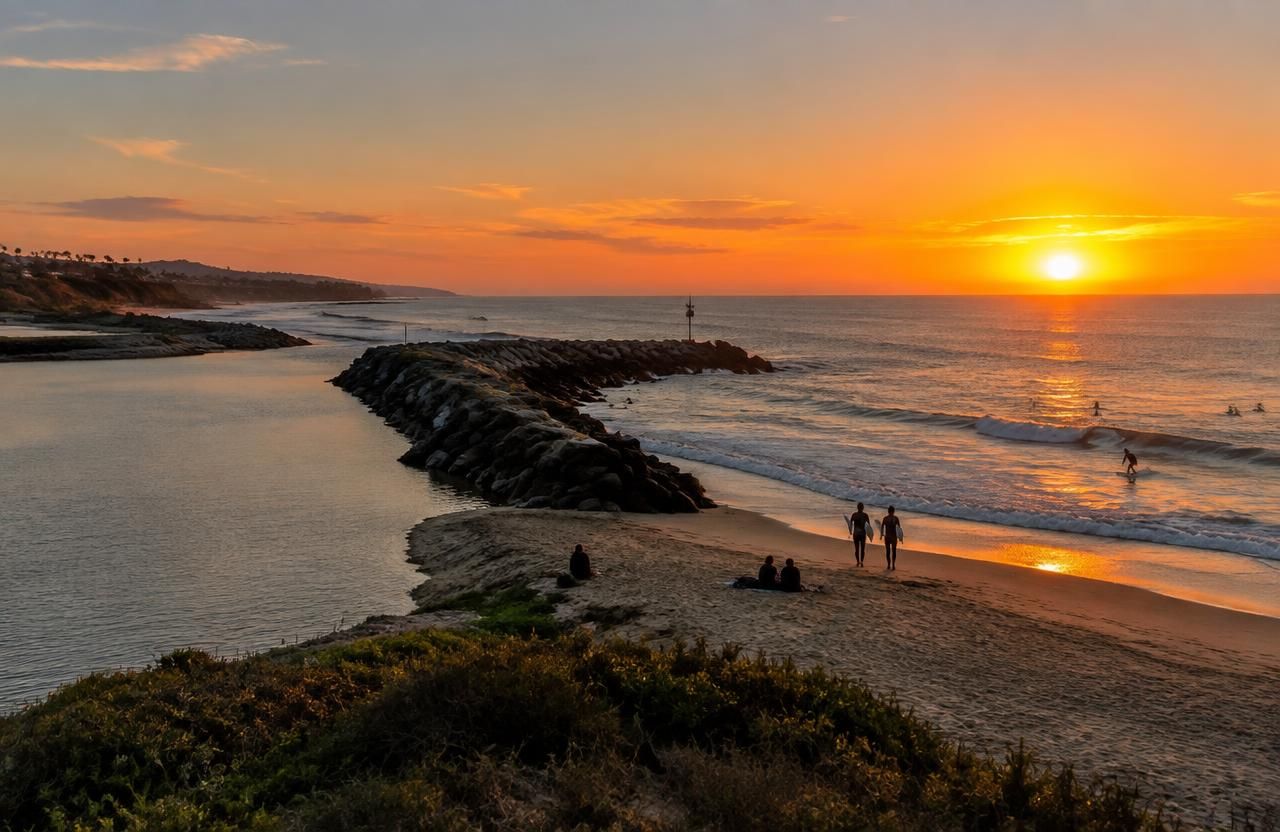
South Ponto Beach
South Ponto sits at the very southern tip of Carlsbad, where Batiquitos Lagoon meets the Pacific through a rock-lined inlet. The jetty shapes some of the best sandbars in the area, and surfers flock here when a winter northwest swell lights it up.
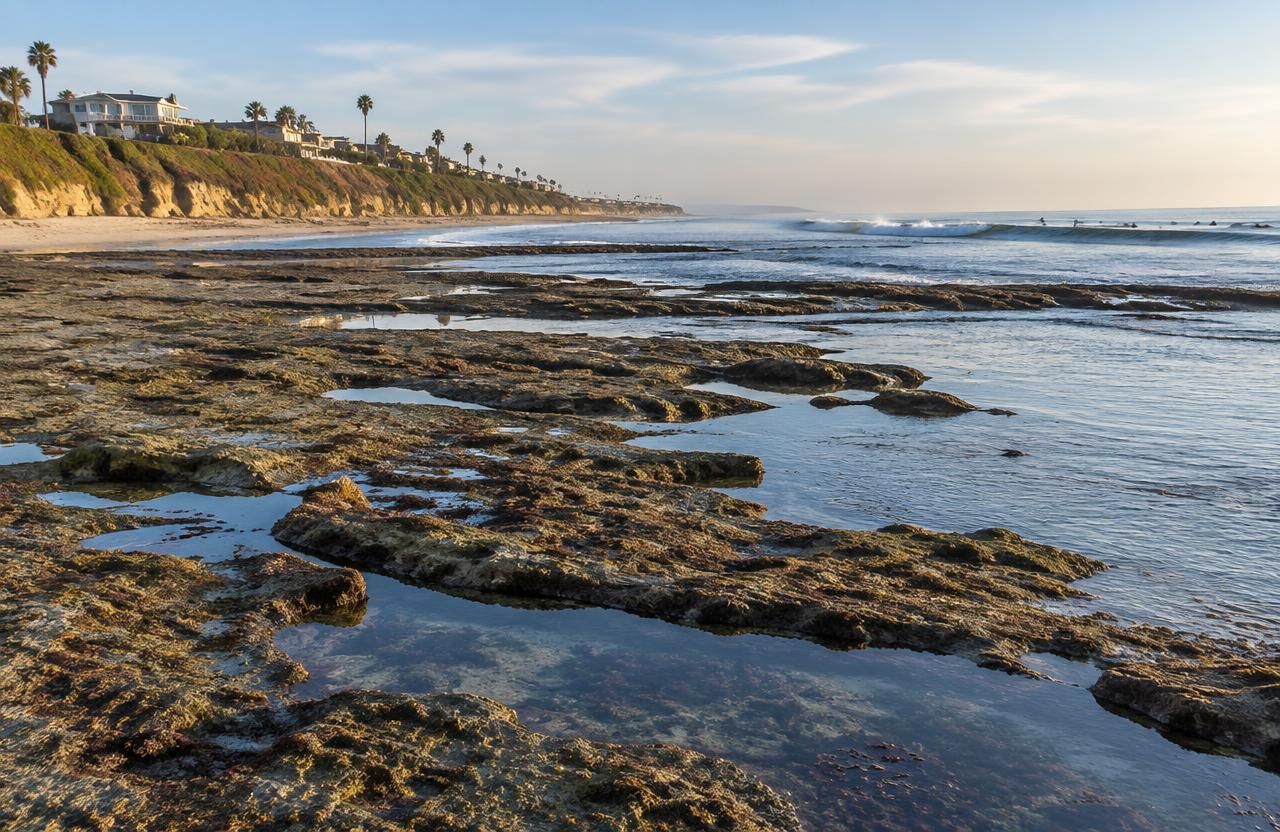
Terramar Beach
Terramar is a local's beach in a residential Carlsbad neighborhood, where a rocky reef point breaks up the long sandy coast. At low tide the reef drains to reveal tide pools full of anemones, sea hares and small crabs; at mid tide surfers ride the reef's rights and lefts.
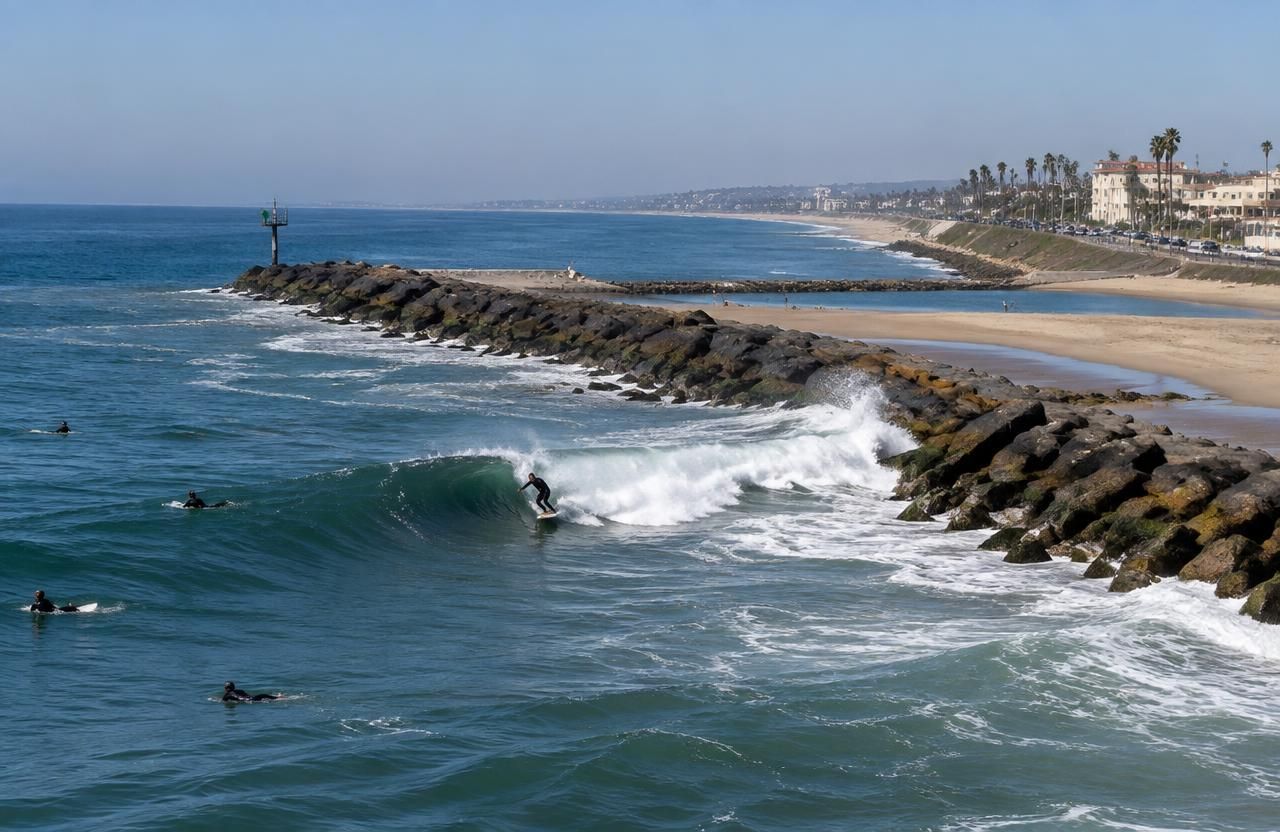
Warm Water Jetty
Warm Water Jetty sits at the outlet of Agua Hedionda Lagoon, just south of Tamarack. It earned its name from the old Encina power plant, which discharged warm water here; the plant shut down in 2018, so the water today is the same temperature as the rest of the coast — but the name stuck.
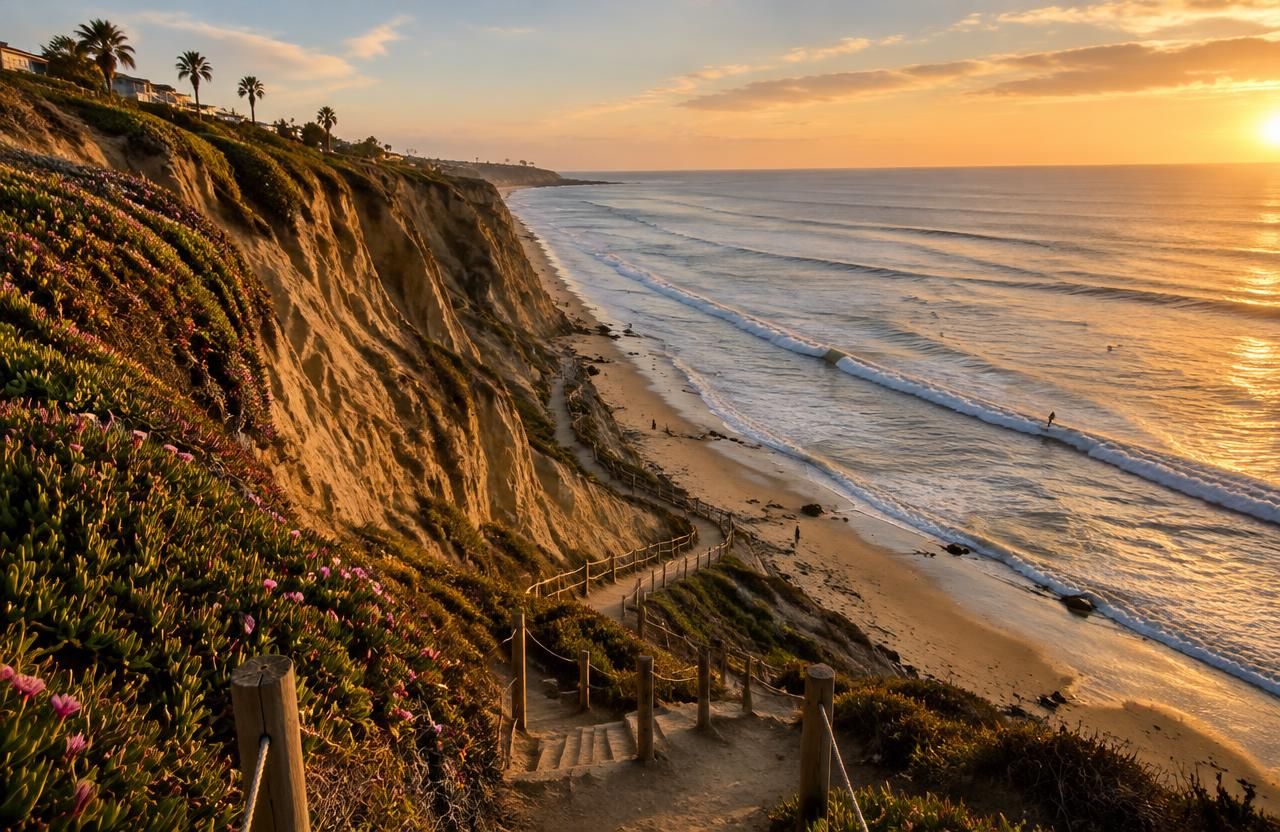
Beacon's Beach
Beacon's is Leucadia's classic surf beach: a narrow strip of sand beneath towering sandstone bluffs, reached by a switchback trail cut into the cliff. Up top, a small free lot on Neptune Avenue offers one of the best sunset overlooks in North County.
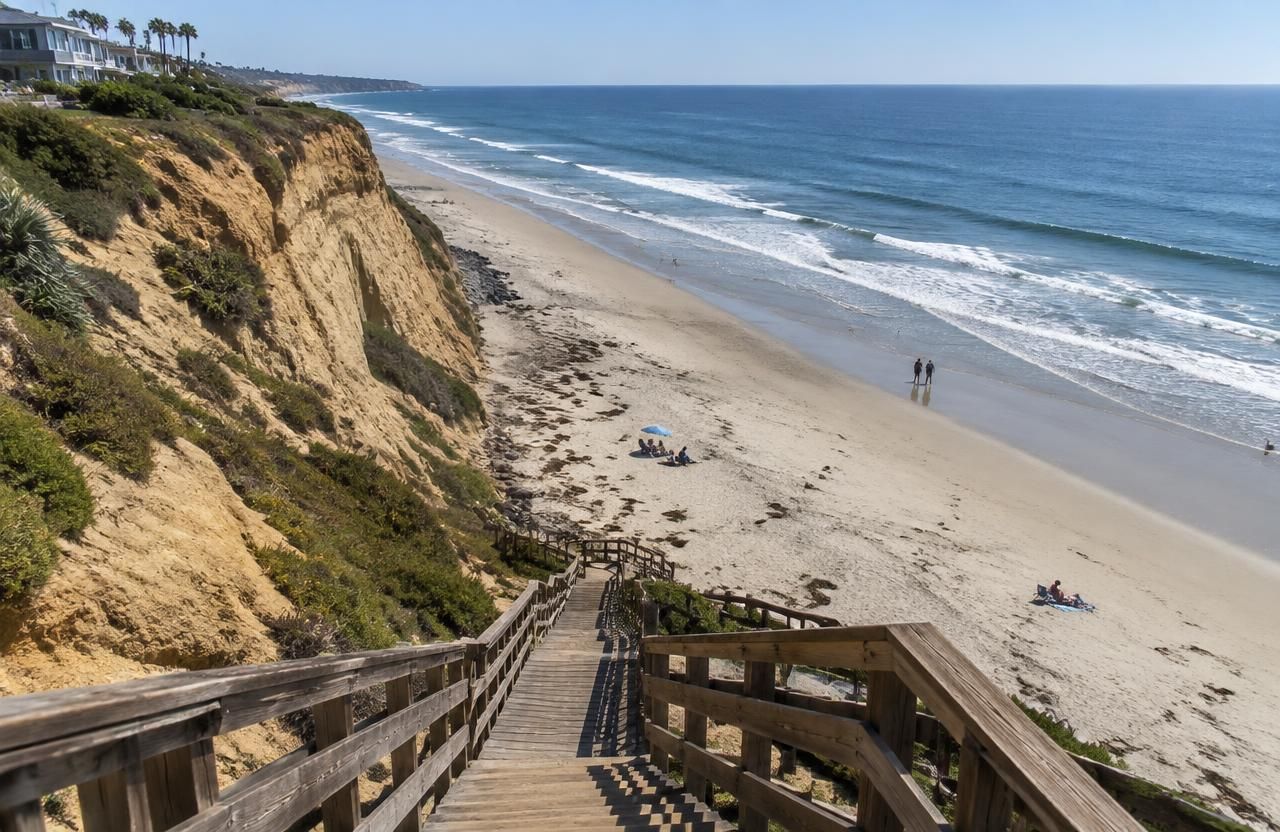
Grandview Beach
Grandview lives up to its name. A long wooden staircase drops down a high bluff from a small free lot at Neptune Avenue and Grandview Street, delivering you to a wide, sandy beach that feels miles from anywhere.
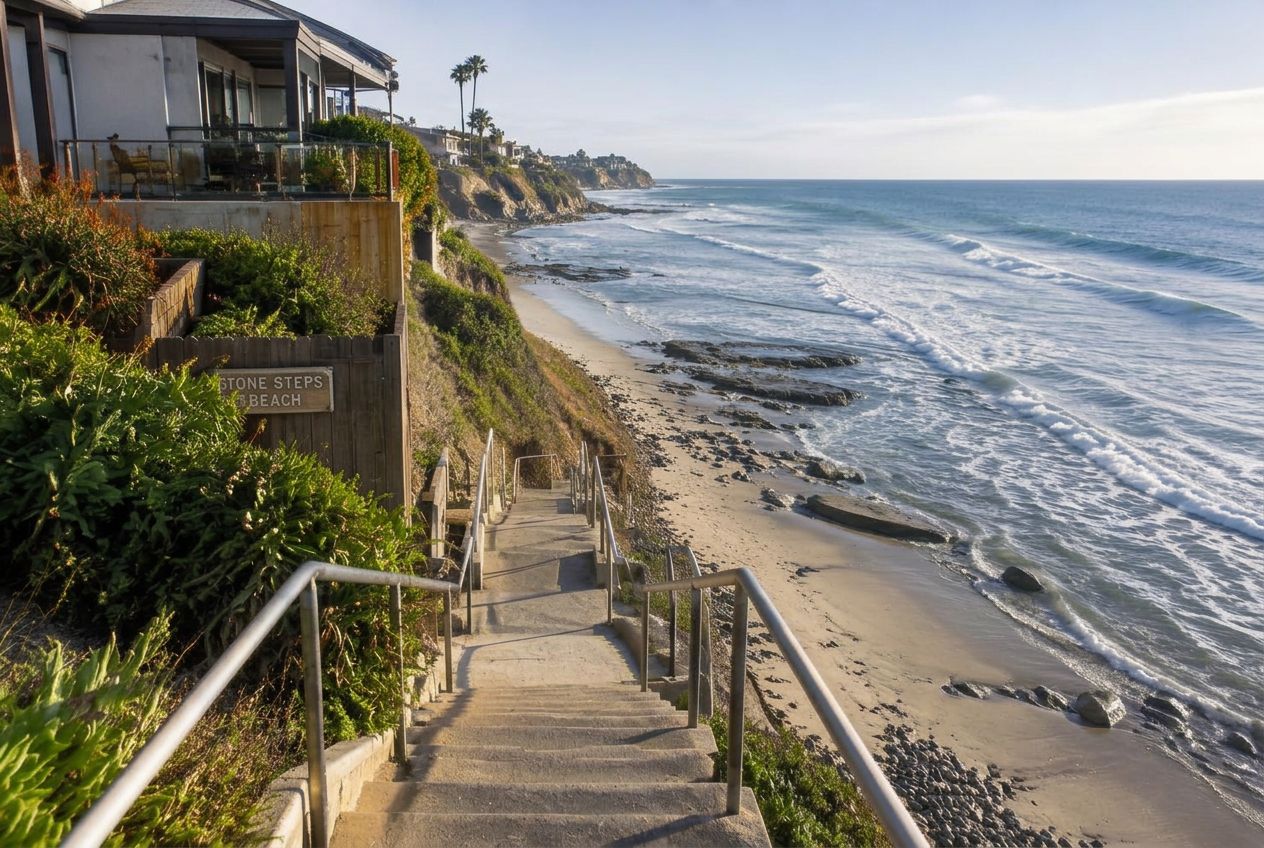
Stone Steps Beach
Stone Steps is a hidden-in-plain-sight Encinitas beach reached by a steep concrete staircase at the end of South El Portal Street. It's tucked between Moonlight Beach and Beacon's, and most visitors drive right past it.
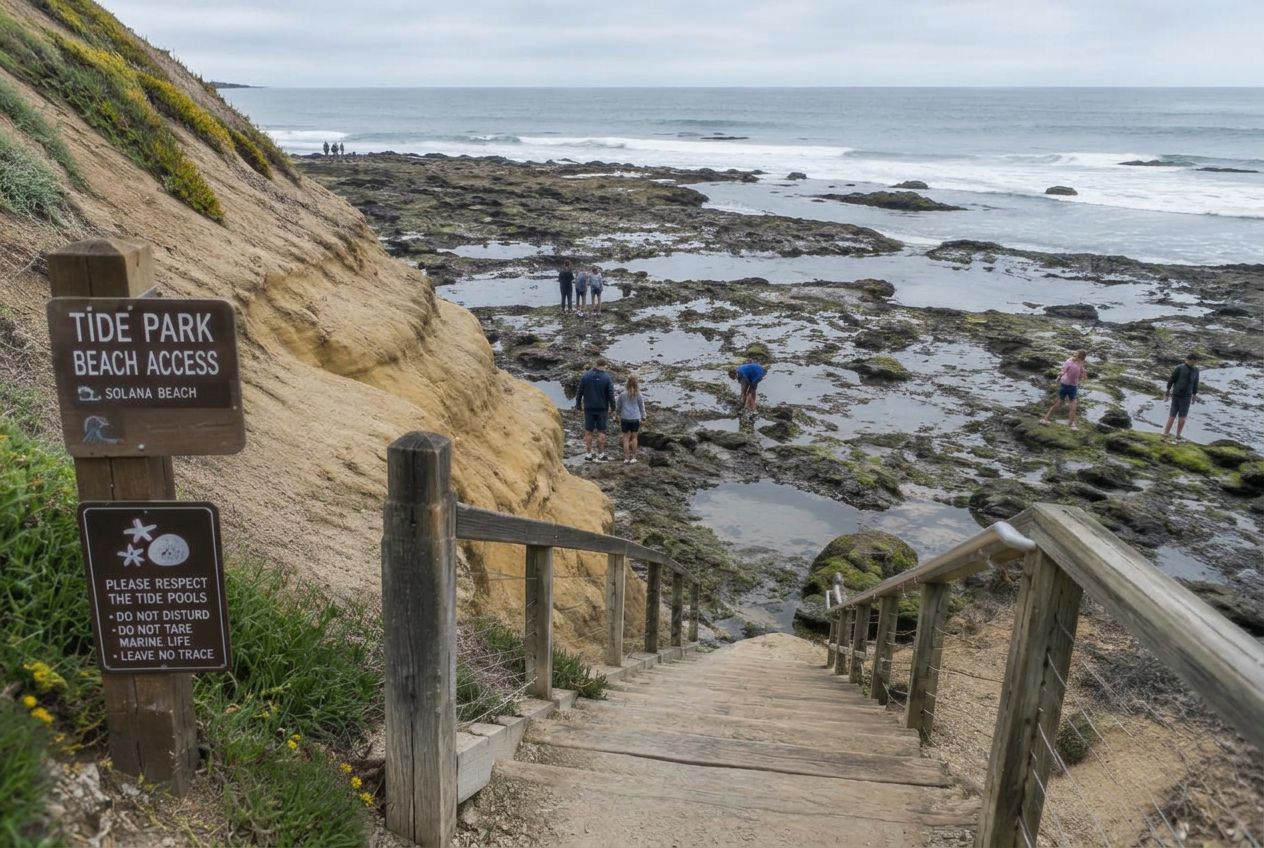
Tide Park Beach Access
Tide Park (Tide Beach Park) is Solana Beach's tide-pool access point: a small bluff-top park with a staircase leading down to a wide rocky reef. At low tide the reef drains into a maze of pools full of anemones, sea stars, crabs and hermit crabs.
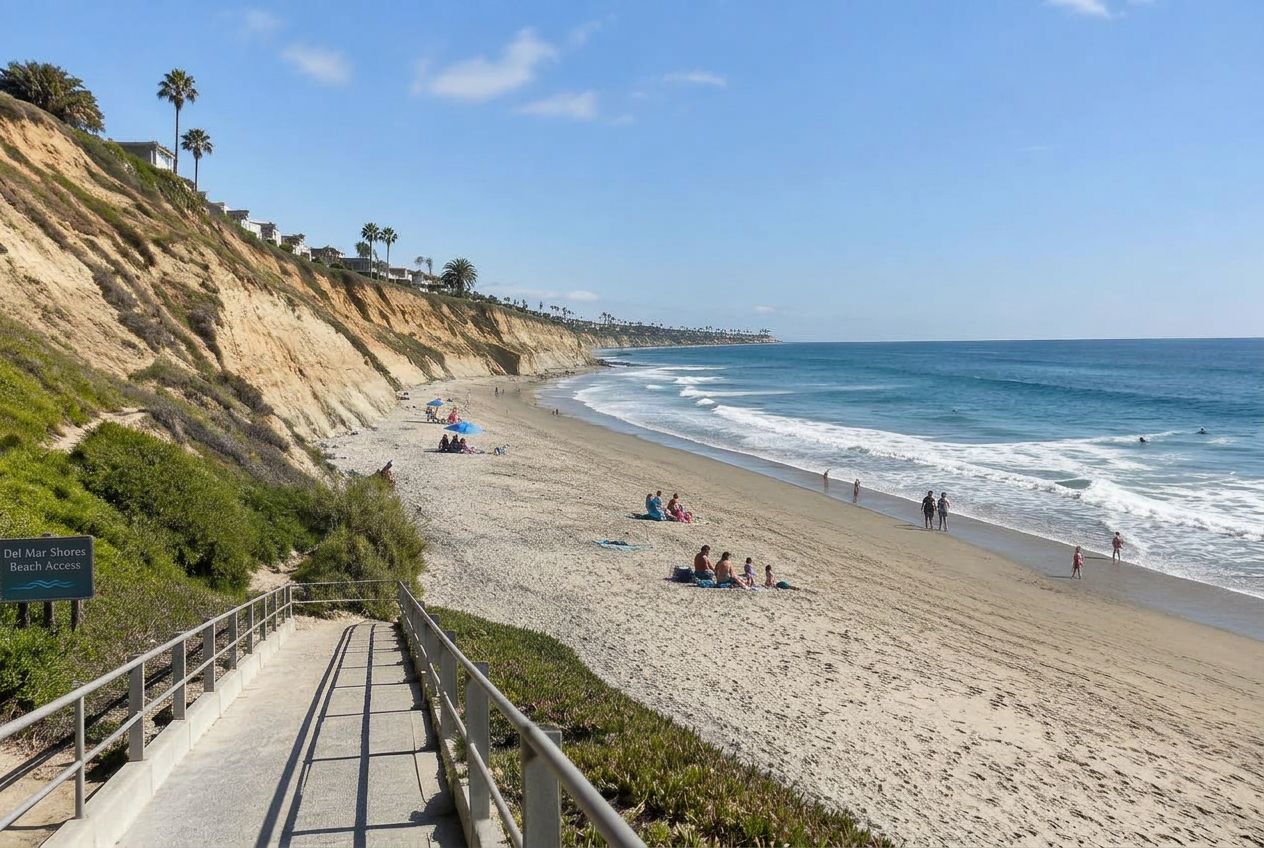
Del Mar Shores Beach
Despite the name, Del Mar Shores is in Solana Beach — the southernmost beach access in the city, at the end of Del Mar Shores Terrace. A paved path and stairs descend the bluff to a wide, sandy beach that's popular with families, beach volleyball players and surfers.
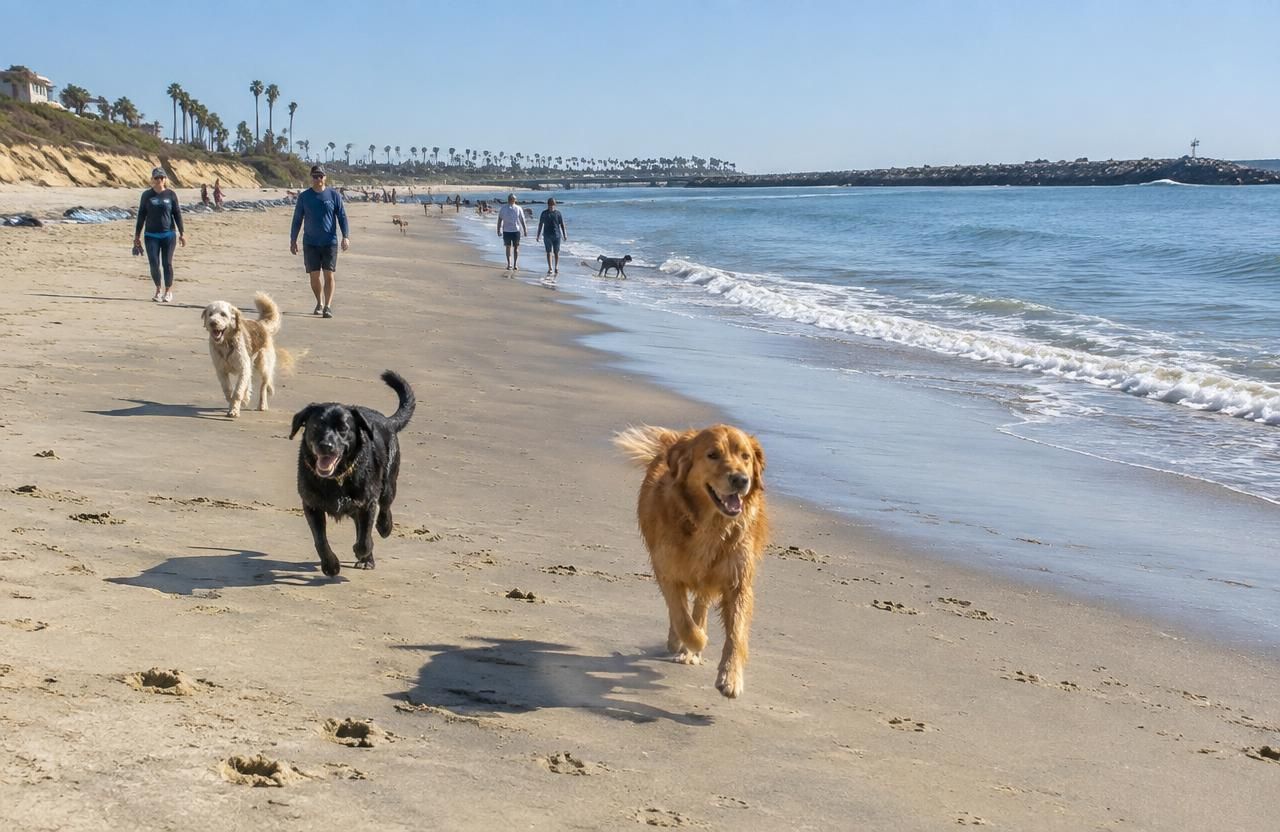
Del Mar Dog Beach (North Beach)
Del Mar's North Beach — known to everyone as Dog Beach — stretches from the San Dieguito River mouth north to the Solana Beach line. It's one of the few San Diego County beaches where dogs can run off leash, and on a weekend morning it's pure joy: retrievers in the surf, puppies chasing each other, and happy owners strolling the wide sand.
Regional deep-dives
Ultimate beach guides by region
Planning a real day at the coast? Each regional guide combines 5–8 beaches with parking, amenities, surf, dog rules, food, a seasonal calendar and the local rules worth knowing.
North County Beaches
Oceanside, Carlsbad, Encinitas, Cardiff, Del Mar, Torrey Pines.
Read the guide →La Jolla, PB & Mission Bay
La Jolla Cove & Shores, Windansea, Black's, Tourmaline, PB, Mission Beach.
Read the guide →South Bay & Coronado
Ocean Beach, Sunset Cliffs, Coronado, Silver Strand, Imperial Beach.
Read the guide →Curated roundups
Pick a theme
Short, focused roundups when you know exactly what kind of day you want — toddler-safe water, the perfect sunset, a tide-pool route or a morning of shorebirds.
Dog-friendly beaches
Every off-leash and leashed-friendly beach for dogs in San Diego.
Read →Best beaches for toddlers
La Jolla Shores, Silver Strand bayside, Coronado, Moonlight, Mission Bay.
Read →The ultimate tide-pooling route
Cabrillo → Sunset Cliffs → False Point → Children's Pool → Cardiff.
Read →Best beaches for sunset
Sunset Cliffs, Windansea, Torrey Pines, Moonlight, Coronado.
Read →Best beaches for birding
Children's Pool, Torrey Pines, Cardiff, Silver Strand, Tijuana Estuary, Cabrillo.
Read →In-depth guide
Beach profiles
36 beaches, written from the sand up — what they're really like, who they're best for, where to park, and what only a local would tell you.
Showing 36 of 36 beaches
La Jolla
La Jolla Cove
Tucked into the curve of bluffs above downtown La Jolla, La Jolla Cove is a small, dramatically protected pocket of sand surrounded by sandstone cliffs and one of California's most active marine reserves. The water inside the cove is calm enough to feel like a natural swimming pool, and on a clear summer morning you can see straight down to the kelp and sand 20 feet below. It's the rare San Diego beach that genuinely lives up to the postcards.
The cove is part of the San Diego–La Jolla Underwater Park, which means the snorkeling here is exceptional by California standards. Bright orange garibaldi (the state marine fish) are everywhere, harmless leopard sharks gather in the shallows from June through October, and you'll often share the water with sea lions cruising in from the rocks next door. Bring a mask and fins — the show is free, and it starts about ten feet from shore.
Parking is the main challenge. The free lot at Ellen Browning Scripps Park- which sits on top of La Jolla Cove - fills by 9am every weekend in summer, and street parking in La Jolla Village runs metered until 6pm. Plan to arrive early, walk in from a side street like Eads or Girard, or use the paid lots on Prospect. Restrooms and outdoor showers are available at the park above the cove, and lifeguards are stationed seasonally.
The cove is small — maybe 200 feet of sand at low tide and almost none at high tide — so it's not a beach for sprawling out with chairs and umbrellas. Treat it as a swim-and-snorkel destination, then walk five minutes north to Boomer Beach or north to the Children's Pool for a different angle on the same coastline.
Local insider tip
Time your visit for a tide of 1.5 ft or lower. Above 3 ft the sand mostly disappears and entry over the rocks gets sketchy. Check the tide chart the night before.
Parking
Free lot + metered street, fills by 9am
Lifeguards
Seasonal, May–Sept
RESTROOMS
Yes, at Scripps Park
Best for
Snorkeling, sea lion spotting
Water temp
58°F (Feb) – 70°F (Sept)
La Jolla
La Jolla Shores
A mile of flat, golden sand framed by the bluffs of Scripps to the north and the village of La Jolla to the south, La Jolla Shores is the gentlest, most family-friendly beach in San Diego — and arguably the best all-around beach day in the city. The waves break softly over a sandy bottom, the slope into the water is shallow for a long way out, and the whole beach is backed by a grassy park with picnic tables, restrooms, and a playground. It's the rare beach that genuinely works for toddlers, teenage surfers, and grandparents on the same afternoon.
The Shores is San Diego's busiest learn-to-surf classroom. Half a dozen surf schools run morning lessons here year-round, and the lineup is patient with beginners in a way that no other San Diego break is South of the lifeguard tower, kayak and snorkel tours launch toward the La Jolla Sea Caves and the marine reserve — protected water inside the cove makes for one of the easiest paddles on the coast.
Parking is the catch. The Kellogg Park lot at the foot of Avenida de la Playa fills by 9am every weekend in summer; after that you'll be circling the residential streets above. Restrooms, outdoor showers, and seasonal lifeguards are all on-site, and there are concrete fire rings on the south end of the beach for sunset bonfires (first come, first served).
After your session, walk three blocks up Avenida de la Playa for breakfast burritos at Galaxy Taco or coffee at Bird Rock Coffee Roasters. The Shores neighborhood feels worlds away from the village just over the bluff — slower, more residential, and built around the beach rather than the shops.
Local insider tip
Arrive before 8am for a parking spot in Kellogg Park lot, or come after 4pm when the day-trippers leave and the late-afternoon light on the bluffs is at its best.
Parking
Free lot + street, fills by 9am
Lifeguards
Year-round, central tower
RESTROOMS
Yes, plus showers and fire rings
Best for
Families, learning to surf, kayaking
Water temp
58°F (Feb) – 70°F (Sept)
Coronado Island
Coronado Beach
Coronado Beach has been ranked America's best beach more times than anyone bothers to count, and once you stand on it the reason is obvious. The sand is flat, wide, and famously sparkly — the result of trace amounts of the mineral mica — and it stretches for nearly two unbroken miles in front of the red-turreted Hotel del Coronado. On a sunny afternoon the whole scene looks engineered for a postcard.
What makes Coronado work for almost everyone is the sheer scale. Even on the busiest July weekend, the beach is so wide and so long that families, dog walkers, surf schools, and sunset photographers can all spread out without crowding each other. The waves are gentle compared to most San Diego beaches, lifeguards are stationed year-round, and the slope into the water is gradual — small kids can wade in safely while parents keep watch from a chair.
Getting onto the island is half the experience. Drive across the Coronado Bridge for the views, take the ferry from downtown San Diego ($7 each way) for a slower entry, or bike the Bayshore Bikeway. Once on the island, free street parking is plentiful east of Orange Avenue but tight near the Hotel Del — arrive before 10am or be ready to walk a few blocks. There are restrooms, showers, and a snack bar at the Central Beach lifeguard tower.
The north end of Coronado, beyond the rock jetties near the naval base, is the off-leash dog beach. The south end, in front of the Hotel Del, is where you'll find the bonfire pits (first come, first served, and bring your own wood). Both are walkable from the central beach access.
Local insider tip
Walk south along the sand past the Hotel Del at sunset and look back — the building's red turrets glow against the sky for about 15 minutes. It's the best free photo in San Diego.
Parking
Free street, tight near Hotel Del
Lifeguards
Year-round
Restrooms
Yes, multiple access points
Best for
Families, walking, sunsets
Water temp
59°F (Feb) – 70°F (Sept)
Pacific Beach
Pacific Beach
Pacific Beach — PB to anyone who lives here — is the social heart of San Diego's coastal scene. The 3.2-mile boardwalk that runs from the south end of Mission Beach all the way north to Crystal Pier is the city's unofficial main street: roller skaters, beach cruisers, surf-school groups, dog walkers, and people carrying breakfast burritos all share the same concrete strip from sunrise to long after sunset.
The beach itself is wide, sandy, and well-suited to first-time surfers. The waves break in soft, predictable lines about 50 yards out, and several surf schools (Surf Diva, Pacific Surf School, Mission Beach Surf School) run group lessons every morning starting around 9am. If you've never surfed before, this is the most forgiving classroom in the city — the bottom is sand, not reef, and the waves rarely top four feet during summer.
Crystal Pier is the visual anchor: a wooden pier built in 1927, with a small cluster of cottages you can actually rent for the night perched directly over the surf. Around it, Garnet Avenue is packed with bars, taco shops, coffee roasters, and rental stands. Free parking exists in the side streets but turns competitive by 10am — try Mission Boulevard north of Garnet, or pay $10–15 for a lot near the pier.
PB has a reputation for nightlife, and it's earned: the bars between Mission and Garnet get loud after dark on weekends. During the day, though, the vibe is unmistakably wholesome — surfboards on every other roof rack and acai bowls being eaten on the sand.
Local insider tip
Skip the lot and bike in. The boardwalk connects directly to Mission Beach and Belmont Park, so one rental gets you a five-mile car-free coastal loop.
Parking
Free street + paid lots, fills 10am
Lifeguards
Year-round
RESTROOMS
Yes, every 1.5 miles
Best for
Learning to surf, boardwalk life
Water temp
58°F (Feb) – 70°F (Sept)
Pacific Beach
Tourmaline Surfing Park
Tucked at the northern edge of Pacific Beach, just below the bluffs of La Jolla, Tourmaline Surfing Park is San Diego's only city beach designated exclusively for surfing — no swimmers in the lineup, no boogie boards getting in the way, just a friendly stretch of sand reserved for people on boards. Locals call it 'Tourmo,' and for half a century it has been the city's unofficial home of longboarding.
The break itself is mellow by San Diego standards: a long, soft wave that breaks over a sandy bottom, perfect for learners, longboarders, and anyone easing back into surfing after a long break. Surf schools run lessons here every morning, and on a small day the lineup feels more like a community pool than a competitive break. When a real swell hits, the regulars come out and the takeoff zone tightens up, but the vibe stays unusually low-key.
The free dirt lot at the foot of Tourmaline Street holds maybe 80 cars and fills by 7am on summer weekends. After that you'll be parking on the residential streets above and walking down. There's a single set of restrooms, an outdoor rinse shower, and a grassy bluff above the sand that's a favorite spot for sunrise coffee and post-surf stretching. Lifeguards are seasonal at the central tower.
After your session, the cluster of cafés along Mission Boulevard a few blocks south is where everyone ends up: Better Buzz Coffee, Kono's for the famous breakfast burrito, or Goody's Sushi & Grill for an early lunch. It's the most laid-back start to a San Diego beach day you can have.
Local insider tip
If the dirt lot is full, drive two blocks up to Loring Street — there's free residential parking and a quieter walk-in path down to the north end of the beach where the crowd is always thinner.
Parking
Free dirt lot, fills by 7am weekends
Lifeguards
Seasonal, central tower
RESTROOMS
Yes, plus outdoor shower
Best for
Longboarding, learning, sunrise sessions
Water temp
58°F (Feb) – 70°F (Sept)
Point Loma
Ocean Beach
Ocean Beach — OB — is the proudly weird neighbor of Point Loma. It's the part of San Diego that never quite let go of the 1970s: tie-dye shops, a Wednesday farmers market that closes Newport Avenue, surf shops older than most of their customers, and a community of locals who actively work to keep chain stores out of the neighborhood. If Pacific Beach feels like a college town, OB feels like a small surf town that happens to be inside the city.
The beach itself is split by the Ocean Beach Pier — the longest concrete pier on the West Coast at 1,971 feet. South of the pier you'll find a wide sandy beach popular with locals and surfers. North of the pier, past the river mouth, is Dog Beach: San Diego's original off-leash beach, open 24 hours, where dozens of dogs sprint through the surf at any given moment. It's an event in itself, and worth a visit even if you don't have a dog.
Free parking is more available here than at most San Diego beaches — try the lots at the foot of Newport Avenue and the dirt lot near Dog Beach. Restrooms, showers, and bonfire pits are all on the main beach, and lifeguards are stationed year-round at the central tower. The water can get rough in winter when north swells push through, so check the lifeguard flags before swimming.
After the beach, walk up Newport Avenue. It's three blocks of independent restaurants, vintage shops, and the famous OB Antique Mall. Hodad's burgers, on the corner of Newport and Bacon, has been a pilgrimage for diner-burger fans since 1969.
Local insider tip
Wednesday afternoon from 4–7pm, Newport Avenue closes for the OB Farmers Market — live music, food trucks, and the best pre-sunset hangout in town.
Parking
Free lots + street, easier than most
Lifeguards
Year-round
Restrooms
Yes, plus showers and fire pits
Best for
Dogs, surf culture, character
Water temp
58°F (Feb) – 69°F (Sept)
Mission Bay
Mission Beach
Mission Beach is the closest San Diego gets to a classic American boardwalk experience. The two-mile strand runs along a narrow strip of land between the Pacific Ocean and Mission Bay, and Belmont Park — a small amusement park anchored by the Giant Dipper, a wooden roller coaster operating since 1925 — sits right in the middle of the action. The beach is wide, the boardwalk is flat, and on a summer Saturday it's pure controlled chaos in the best way.
The geography here is what makes it special. With the ocean on one side and Mission Bay on the other, you can be bodysurfing in the Pacific in the morning and paddleboarding on flat protected water in the afternoon — a 10-minute walk between them. The bay side is also where you'll find calm-water rentals: kayaks, jet skis, paddleboards, and small sailboats from Mission Bay Sportcenter.
Parking is a real challenge in summer. The lots at Belmont Park and Mission Bay Park fill by 10am on weekends. Free street parking exists south of Belmont but turns into a multi-block walk. The smartest move is to bike in along the boardwalk from Pacific Beach or rent a beach cruiser at one of the dozen rental shops on Mission Boulevard.
Restrooms are spaced every 1.5 miles. Showers are located at ilfeguard station towers. There are Bonfire rings at the south end near South Mission Beach. The beach narrows considerably at the south end where it meets the jetty — that's where the locals' surf break, the Wedge, sits, and where bodyboarders gather on big southwest swells.
Local insider tip
Park free on the bay side near Bonita Cove, then walk five minutes across the strand to the ocean. You skip the worst of the beach-side parking war.
Parking
Tight, fills 10am — bike instead
Lifeguards
Year-round
RESTROOMS
Yes, plus showers and fire rings
Best for
Boardwalk, rentals, bay + ocean combo
Water temp
58°F (Feb) – 70°F (Sept)
La Jolla
Windansea Beach
Windansea is the beach Tom Wolfe wrote about in The Pump House Gang, and 60 years later it still feels like a place outsiders are welcome to visit but locals quietly run. Tucked into a residential stretch of La Jolla south of the village, the beach is small, rocky, and gloriously unfussy — no boardwalk, no rental stands, just a few sandstone rocks, a famous palm-thatched surf shack, and one of the most consistent reef breaks in Southern California.
The vibe is laid-back but the surf is serious. Windansea breaks over a shallow reef and produces fast, hollow waves that are best left to experienced surfers. If you're a beginner, watch from the rocks rather than paddling out — the locals are protective of the lineup and the wave will punish a missed takeoff. For everyone else, it's an extraordinary beach to walk, photograph, and sit on at sunset.
Access is via residential streets. Free street parking on Neptune Place and Nautilus Street fills by mid-morning on weekends but turns over fast. There are no restrooms, no showers, and no lifeguards on duty most of the year — bring water, bring a towel, and don't expect amenities. The famous palm shack at the top of the beach was built in 1947 and has been rebuilt by locals every time a storm takes it out.
Sunsets at Windansea are some of the best in the city, partly because of the shape of the rocks and partly because there's nothing built up around you to break the horizon. Bring a blanket, find a flat sandstone ledge, and stay through the afterglow.
Local insider tip
Park on Nautilus Street and walk down — it's a slightly longer walk than Neptune but parking turns over much faster, and you arrive at the south end of the beach where it's quietest.
Parking
Free street only, tight on weekends
Lifeguards
Summer only
RESTROOMS
None
Best for
Sunsets, photography, expert surfers
Water temp
58°F (Feb) – 70°F (Sept)
North La Jolla
Torrey Pines State Beach
Torrey Pines State Beach sits at the foot of one of California's most dramatic stretches of coastline — 300-foot sandstone bluffs covered in the rare, twisted Torrey pine trees that grow nowhere else in the world except here and one small island offshore. The beach below is wide, undeveloped, and feels remarkably remote considering it's 20 minutes from downtown San Diego.
Torrey Pines State Beach and its North and South beach parking lots remain open during the State Natural Reserve closure. The reserve's road, Lodge, Beach Trail Staircase, all trails, and both upper parking lots are closed from September 22, 2026 through February 2027, with full access expected March 1, 2027. Reach the sand directly from a beach lot; do not enter through the reserve.
The beach itself stretches for 4.5 miles between the reserve and the Del Mar racetrack. At low tide you can walk almost the entire length. The water can be rough — there are rip currents along the bluffs and lifeguards are stationed only seasonally — but it's one of the great walking beaches in the state, and the cliff scenery is genuinely world-class. Look for hang gliders launching from Black's Beach overlook just to the south.
The reserve trails cannot currently be combined with a beach visit. For an open coastal walk, stay on the sand at a safe tide or choose another San Diego trail. There are no food options at the beach — pack a picnic or stop in nearby Del Mar village afterward.
Local insider tip
Use the open North or South beach lot and stay out of the closed reserve. Visit at low tide for the widest sand, keep well away from the unstable bluffs, and check the return tide before walking far.
Parking
North & South beach lots open; upper reserve lots closed
Lifeguards
Seasonal
RESTROOMS
Yes, at both lots
Best for
Beach walks and photography; reserve trails closed
Water temp
58°F (Feb) – 69°F (Sept)
Point Loma
Sunset Cliffs
Sunset Cliffs Natural Park isn't a sand beach in the conventional sense — it's a 68-acre stretch of jagged sandstone bluffs along the western edge of Point Loma, with hidden coves, sea arches, and tide pools accessible only at low tide. It's the place locals come when they want a San Diego coast experience that doesn't involve laying out a towel.
The cliffs run for about 1.5 miles along Sunset Cliffs Boulevard, with informal viewpoints every few hundred feet. The southern end, near Ladera Street, is the most dramatic — there's a steep wooden staircase that drops down to a small pocket beach, and at low tide you can walk through arches and explore tide pools full of anemones, hermit crabs, and small fish. The northern stretch is flatter and easier to walk along the bluff top, popular with joggers and dog walkers.
Parking is free along Sunset Cliffs Boulevard but very limited — there are no formal lots, just street parking that fills fast on weekends and any evening with a good sunset. There are no restrooms, no showers, and no lifeguards. The cliffs are actively eroding, so stay behind the cable barriers; people are seriously injured here every year by getting too close to crumbling edges.
This is, without exaggeration, the best sunset spot on the San Diego coast. The west-facing cliffs catch the last 30 minutes of light beautifully, and on clear evenings you'll see Coronado Islands silhouetted offshore. Show up an hour before sunset, bring a windbreaker, and pick a ledge.
Local insider tip
For tide pooling, check the chart and aim for any tide below 0.5 ft. The Ladera Street access is best — climb down the staircase, turn south, and you'll find pools the casual visitors never see.
Parking
Free street, very tight at sunset
Lifeguards
None
RESTROOMS
None
Best for
Sunsets, tide pools, photography
Water temp
Not for swimming
Del Mar
Powerhouse Park – Del Mar
Powerhouse Park sits at the north end of Del Mar Beach, where a grassy blufftop park spills down a gentle staircase to a wide, well-kept stretch of sand. The park gets its name from a beautifully restored 1920s brick powerhouse building that now serves as a community space, and the whole area has the polished, low-key wealth that defines Del Mar village.
This is one of the easiest North County beaches to enjoy with kids or grandparents. The grass is shaded by mature trees and lined with picnic tables. The walk down to the sand is short and stair-accessible. The sand itself is wide and clean, lifeguards are on duty year-round at the main tower, and the waves are typically gentle — Del Mar's beach slope creates softer break than the harder reef breaks just north and south.
Free parking is along Coast Boulevard right next to the park, but spaces fill quickly on weekends and during racing season (mid-July through early September) when nearby Del Mar Racetrack draws crowds. Restrooms and outdoor showers are at the south end of the park. Del Mar village is two blocks east — Stratford Court and 15th Street are lined with cafés (Americana, Stratford Court Café), boutiques, and the upscale L'Auberge resort.
After the beach, walk south along the sand to the river mouth where the San Dieguito Lagoon meets the ocean — it's a short, scenic stretch with shorebirds and almost no crowd. Or head up to the bluffs and walk north along the railroad tracks toward Solana Beach for one of the prettiest coastal walks in the county.
Local insider tip
On Tuesday nights in summer, Powerhouse Park hosts free concerts from 6–7:45pm. Bring a blanket and dinner from Stratford Court Café two blocks up the hill.
Parking
Free along Coast Blvd, fills weekends
Lifeguards
Year-round
Restrooms
Yes, plus showers
Best for
Families, picnics, easy access
Water temp
59°F (Feb) – 69°F (Sept)
Cardiff-by-the-Sea
Cardiff Reef
Cardiff Reef sits just south of Swami's, where Highway 101 curves along the edge of the San Elijo Lagoon and the coastline opens into one of the widest, most welcoming reef breaks in North County. The beach is a long stretch of cobblestone and golden sand, framed by low bluffs to the south and the lagoon mouth to the north — a setting that feels distinctly more rural than San Diego's city beaches even though it's only 25 minutes up the coast.
The break is famously forgiving. The reef sits well offshore and produces long, soft-shouldered waves that hold their shape across a wide takeoff zone, which means the lineup spreads out and stays mellow even on busier days. It's the spot where most North County surfers either learn to surf or learn to longboard, and on any given afternoon you'll see everyone from grommets to grandparents trading waves. Surf schools operate out of the south end of the lot.
Parking is at the paid Seaside lot off South Coast Highway 101 ($3/hour or $15 day-use), with restrooms, outdoor showers, and a small grassy area for changing and stretching. Cross the highway and you're at Cardiff Campground, where fire rings, picnic tables, and a small store make this an easy place to spend a full day. Lifeguards are seasonal at the main tower, year-round at the south end near Pipes.
The dining strip across the highway is one of the best post-surf food clusters in the county — Pacific Coast Grill for upscale seafood with a sunset view, Las Olas for classic beach Mexican, and Pipes Café two blocks south for the breakfast burrito most locals will recommend without prompting.
Local insider tip
Park at George's at the Cove parking area on the south end and walk north along the sand — you skip the day-use fee and end up at the quieter middle section of the reef where the crowd thins out.
Parking
Paid Seaside lot, $3/hr or $15/day
Lifeguards
Year-round at south tower
RESTROOMS
Yes, plus showers
Best for
Intermediate surfers, sunsets, families
Water temp
58°F (Feb) – 69°F (Sept)
La Jolla / Torrey Pines
Black's Beach
Black's Beach is the most dramatic stretch of sand in San Diego and easily the hardest to reach. It sits at the base of 300-foot sandstone cliffs between La Jolla and Torrey Pines, and the only way down is one of three steep, unmaintained trails that descend through the bluffs. The reward for the climb is two miles of wide, often nearly empty beach with one of the most powerful surf breaks on the coast.
The most popular access is the Black's Beach Trail off La Jolla Farms Road — a steep, paved-then-dirt path that takes about 15 minutes to descend and 25 to climb back up. There's also the Ho Chi Minh Trail (genuinely sketchy and not recommended) and the long flat walk down from Torrey Pines State Beach at low tide. None of these have railings, lighting, or much in the way of help if something goes wrong, so wear real shoes and don't attempt the climb at night.
Once you're on the sand, the scene is extraordinary. Paragliders launch from the gliderport on the bluff above and circle overhead. Surfers tackle the famous Black's break, a powerful beach break with peaks that handle big winter swells better than almost any spot in California. The northern half of the beach is technically clothing-optional and has been since the 1970s — it's not enforced either way and most beachgoers are fully dressed.
There are no restrooms, no lifeguards (except seasonally at the south end near Scripps), no food, and no cell signal in many spots. Bring water, bring sunscreen, and tell someone where you're going. For experienced beachgoers it's one of the great San Diego experiences.
Local insider tip
Walk in from Torrey Pines State Beach at low tide instead of climbing down the cliff. It's a 25-minute beach walk, no climbing required, and you arrive at the quietest north end of Black's.
Parking
Free at gliderport, top of cliffs
Lifeguards
Limited, south end only
RESTROOMS
None on the beach
Best for
Solitude, expert surfers, drama
Water temp
58°F (Feb) – 69°F (Sept)
Encinitas
Swami's Beach
Swami's is one of the most storied surf breaks on the West Coast and one of the most photogenic beaches in North County. It sits directly below the gold-domed Self-Realization Fellowship Hermitage in Encinitas — the meditation retreat founded by Paramahansa Yogananda in 1937 that gave the break its name — and the combination of the white-and-gold towers above and the long right-hand reef break below has been on the cover of California surf magazines for half a century. The Beach Boys named-checked it in 'Surfin' USA' in 1963 and it's been famous ever since.
The beach itself is a narrow strip of sand at the base of sandstone bluffs, accessed by a long wooden staircase that drops down from Seacliff Roadside Park on Highway 101. There are about 80 steps each way — manageable but a real workout if you're carrying a longboard. At high tide the sand mostly disappears and the beach becomes a tide-pool zone among the rocks; at low tide it opens up into a wide, walkable shoreline that connects south to Boneyards Beach.
The surf is the main event. Swami's breaks over a shallow rock reef and produces long, well-shaped right-hand waves that work best on a west or northwest swell. It's a friendly enough wave for intermediate surfers in small conditions, but on bigger days it draws a crowd of skilled longboarders and shortboarders, and the lineup follows a clear pecking order. If you're not surfing, the beach is excellent for tide pooling, a long walk south at low tide, or just sitting and watching one of the prettier surf shows in California.
Free parking is at the lot on Highway 101 above the staircase — about 25 spaces that turn over slowly on weekends. Restrooms and outdoor showers are at the lot. There's a lifeguard tower at the bottom of the stairs in summer. Encinitas village is a five-minute drive north on the 101, with excellent coffee at Lofty Coffee, breakfast at Swami's Café (named after the break), and dozens of surf shops.
Local insider tip
Combine the beach with a quick walk through the Self-Realization Fellowship Meditation Gardens at the top of the bluff — they're free, quiet, koi-pond beautiful, and have arguably the best ocean view in the county.
Parking
Free lot, ~25 spaces, fills weekends
Lifeguards
Summer, at base of stairs
RESTROOMS
Yes, at the upper lot
Best for
Surfing, tide pools, photography
Water temp
58°F (Feb) – 69°F (Sept)
San Clemente (Orange County)
San Onofre — Old Man's
A quick note up front: San Onofre is technically in San Clemente, about 50 minutes north of Oceanside in southern Orange County. We include it because it's the spiritual home of California longboarding and most San Diego surfers will make the drive at least a few times a year — but plan for an hour from downtown San Diego, not a quick local trip. Exit Basilone Road off the I-5 and follow the signs into San Onofre State Beach.
Old Man's is the famous mellow point break just inside the state beach — a long, slow, perfectly-shaped wave that breaks over a cobble bottom and rolls for what feels like forever. It's the wave that defined the modern longboard era, and the culture in the lineup reflects that: friendly, generous, slow-moving, with regulars who have been surfing the same peak for forty years. Beginners and longboarders are genuinely welcomed here in a way they aren't at most California breaks.
Access is via a gravel road that drops from the bluff down to the beach — a slow, dusty crawl that ends at a series of small parking pull-outs right on the sand. The day-use fee runs about $15 per vehicle and the gates often close once the lots fill on weekends, so arrive before 9am in summer or be ready to park at the upper lot and walk down. There are pit-style restrooms only and no lifeguards at Old Man's itself (lifeguards are stationed up the beach at San Onofre Bluffs).
Bring everything you need — there's no food, no shower, no shop. Most regulars pack a cooler, a beach chair, a longboard, and stay all day. After your session, the closest real food is back at the I-5 exit at Basilone, or a 15-minute drive into San Clemente proper for legitimately good Mexican at Pedro's Tacos.
Local insider tip
If the gate is closed because the lots are full, park at the San Onofre Bluffs day-use area a mile north and walk down the bluff trail. It's a 15-minute walk with a board, and you arrive at the quietest north end of Old Man's.
Parking
$15 day-use, gravel pull-outs, fills early
Lifeguards
None at Old Man's
RESTROOMS
Pit toilets only, no showers
Best for
Longboarding, all-day cruisy sessions
Water temp
58°F (Feb) – 70°F (Sept)
Oceanside
Oceanside Pier & Beach
Oceanside is North County's classic surf town — about 45 minutes up the coast from downtown San Diego, just south of the Camp Pendleton border. The wooden Oceanside Pier stretches 1,942 feet over the Pacific (the longest wooden pier on the West Coast), with a wide, flat sandy beach running for miles in both directions. After a long stretch as a sleepy military town, downtown Oceanside has reinvented itself in the last decade with new restaurants, a Sunday farmers market, and the renovated Mission Pacific and Seabird hotels overlooking the pier.
The waves around the pier are forgiving and consistent — south side of the pier tends to be the busiest beginner zone, with surf schools running daily. North side picks up more swell and gets more crowded with shortboarders. Either way, the bottom is sand, the lineup is patient, and on a normal summer day you'll see everything from grom camps to retirees on longboards sharing the same peaks.
Parking is the easiest of any beach in San Diego County. Multiple paid lots near the pier ($1.50–$2/hour, all-day under $20), free street parking a few blocks inland on weekdays, and the Oceanside Transit Center (Coaster + Sprinter + Amtrak Pacific Surfliner) is two blocks from the sand. Restrooms, outdoor showers, year-round lifeguards, and a paid pier (free to walk on) round out the amenities.
After a session, walk three blocks inland to Mission Avenue for breakfast burritos at 333 Pacific or coffee at Steady State. The pier itself has a small bait shop and the iconic Ruby's Diner at the very end (currently closed for renovations as of recent years — check before walking out). Sunset on the pier remains one of San Diego County's signature free experiences.
Local insider tip
Park in the residential blocks just north of the pier (Pacific St. between Wisconsin and Surfrider) — usually free, no time limit, and a 5-minute walk to the sand. Lots of locals never bother with the paid lots.
Parking
Paid lots + free residential, easiest in county
Lifeguards
Year-round, multiple towers
RESTROOMS
Yes, plus showers and pier facilities
Best for
Beginner surf, family days, pier walks
Water temp
58°F (Feb) – 70°F (Sept)
Carlsbad
Carlsbad State Beach (Tamarack)
Tamarack is the workhorse beach of Carlsbad — an easy, accessible stretch of sand backed by a paved bluff-top boardwalk that runs for nearly three miles between Pine Avenue and the Encinitas border. It's not the prettiest beach in North County and it's not the best surf, but it might be the most useful: easy parking, paved bluff path for runners and strollers, gentle waves for beginners, and a wide enough beach that you can almost always find your own patch of sand.
The wave is a forgiving beachbreak that picks up most swells at a manageable size. South side of Tamarack is the main surf zone, with a mostly mellow longboard lineup. North toward Pine is more of a swimmer/family beach. The whole stretch is bordered by the Carlsbad seawall, which makes for some of the best winter storm-watching in the county — when northwest swells hit at high tide, waves crash up against the wall in spectacular fashion.
Parking is the easy part. The state lot at the foot of Tamarack Avenue is metered ($2/hour, 4-hour max), and free street parking is plentiful along Garfield, Carlsbad Boulevard, and the side streets just inland. The Coaster station at Carlsbad Village is a 10-minute walk for a car-free arrival. Restrooms, outdoor showers, and seasonal lifeguards are at the main beach access.
After a session, the Carlsbad Village dining scene is a five-minute drive (or pleasant walk) up Carlsbad Boulevard — Campfire, Vigilucci's, Park 101, and a dozen good options within a few blocks. The boardwalk itself is one of the best places in North County for a sunset run or a cruisy bike ride.
Local insider tip
Park at the free lot at Pine Avenue (north end of the boardwalk) and walk south on the bluff path to your favorite stretch of sand. Avoids the metered Tamarack lot and gives you the prettiest approach.
Parking
Metered state lot + free street parking
Lifeguards
Seasonal, May–Sept
RESTROOMS
Yes, plus showers
Best for
Bluff-top walks, beginner surf, families
Water temp
58°F (Feb) – 70°F (Sept)
Encinitas
Moonlight Beach
Moonlight is Encinitas's beloved town beach — a wide, family-friendly cove at the foot of B Street, just a few blocks from the dining and shopping of downtown Encinitas (101). The name comes from the late-1800s tradition of midnight beach picnics, and the place still has that small-town Southern California energy: volleyball nets in permanent rotation, fire pits booked early on summer evenings, and a casual snack bar that's been a local fixture for decades.
The wave is a gentle beachbreak — small to medium most days, with the best surf usually pushing south of the lifeguard tower. It's a popular learn-to-surf spot, especially during summer when the local surf schools set up daily morning lessons. Outside the surf zone, the protected cove makes for some of the easiest swimming on the North County coast.
Amenities are unusually good for a free city beach: a dedicated playground, restrooms with changing rooms, outdoor showers, multiple volleyball courts, and free fire pits (first-come basis). The big free parking lot at the foot of B Street fills by 9am every weekend in summer, but residential street parking on the blocks above the bluff is free and usually available within a 5-minute walk.
After your beach time, walk three blocks up B Street to downtown Encinitas for some of the best food in North County — Haggo's Organic Taco, Lofty Coffee, Solace and the Moonlight Lounge, or pizza at Pizza Port. It's the rare beach where you can park, swim, eat, and shop all on foot.
Local insider tip
Reserve a fire pit by arriving with firewood by 4pm on a summer evening — they're first-come, first-served and gone by 5. The southernmost pits get the best sunset view.
Parking
Free lot fills by 9am, free street nearby
Lifeguards
Year-round, central tower
RESTROOMS
Yes, plus showers, playground, fire pits
Best for
Families, beginner surf, evening bonfires
Water temp
58°F (Feb) – 70°F (Sept)
Solana Beach
Fletcher Cove
Fletcher Cove is Solana Beach's main public beach access — a small scenic cove tucked beneath sandstone bluffs, with a grassy blufftop park, a community center, and a paved ramp leading down to the sand. It's smaller and quieter than its neighbors at Cardiff and Moonlight, which is exactly why locals love it. The whole vibe is more neighborhood beach than tourist destination.
The wave is a gentle reef-and-sand peak that works best at lower tides — beginners and longboarders share the lineup with an easy-going local crowd. The cove is small enough that the surf zone and swim zone overlap at high tide, so check conditions before launching kids in the water. South of the cove, the beach narrows to a thin strip below cliffs that all but disappears at high tide.
Parking is the trick. The small free lot at the top of the ramp fills almost instantly on weekends, but free residential parking is plentiful along Pacific Avenue and the side streets above. Restrooms and outdoor showers are at the top of the ramp, and seasonal lifeguards work from a small tower. Dogs are allowed off-leash on the beach before 9am and after 6pm — one of the few off-leash windows in North County.
Above the cove, the Cedros Design District is a 5-minute walk inland — a strip of design studios, boutiques, and the famous Pillbox Tavern for post-beach drinks. The Solana Beach Coaster station is also two blocks away, making this one of the easiest North County beaches to reach by train.
Local insider tip
Walk the cliff trail south from Fletcher toward Tide Beach Park (about 10 minutes) for a quieter stretch of sand and dramatically photogenic sandstone formations. Best at low tide.
Parking
Tiny free lot + free street, fills early
Lifeguards
Seasonal, May–Sept
RESTROOMS
Yes, plus showers and grassy bluff park
Best for
Quiet swims, dog mornings, longboarding
Water temp
58°F (Feb) – 70°F (Sept)
La Jolla
La Jolla Children's Pool
The Children's Pool isn't really a beach you swim at anymore — it's one of San Diego's most beloved wildlife viewing spots. The site is a small protected cove enclosed by a concrete seawall built in 1931 (originally as a calm swimming spot for children), now home to a permanent colony of harbor seals and sea lions. From the curved seawall above and the paved overlook on Coast Boulevard, you can watch them rest, play, and pup from just a few feet away.
The beach itself is closed to the public from December 15 through May 15 each year for harbor seal pupping season, and the rope barrier that separates people from the seals is in place year-round. Seals haul out on the sand by the dozens; sea lions lounge on the rocks just north toward Boomer Beach. Even in winter, the overlook is open and offers an excellent view. Bring binoculars and zoom lenses — you don't need to (and shouldn't) get close.
Parking is the same La Jolla Village challenge as everywhere else nearby: free street parking is metered until 6pm and fills by 9am on weekends. Multiple paid lots on Prospect and Girard run $5–10/hour. Restrooms are at Scripps Park (a 5-minute walk north) and at the small Children's Pool comfort station. The site is fully wheelchair-accessible from the Coast Boulevard sidewalk.
Combine a visit with the rest of the La Jolla coast walk: 5 minutes north brings you to La Jolla Cove (snorkeling), 5 minutes south to Wipeout Beach and the start of the Coast Walk Trail. The Children's Pool is small enough to enjoy in 15–20 minutes — perfect as one stop on a longer La Jolla afternoon.
Local insider tip
Visit during pupping season (January–March) to see newborn pups on the sand. Stay quiet, keep dogs off the wall above, and never cross the rope barrier — disturbing seals is a federal offense under the Marine Mammal Protection Act.
Parking
Metered street + paid lots, fills by 9am
Lifeguards
Seasonal, but beach is closed Dec–May
RESTROOMS
Yes, on-site and at nearby Scripps Park
Best for
Seal & sea lion viewing, photography
Water temp
Beach closed to swimmers most of year
Coronado
Silver Strand State Beach
Silver Strand stretches along the narrow isthmus of sand connecting Coronado to Imperial Beach — a five-mile sliver of California where you have the Pacific on one side and San Diego Bay on the other, separated by maybe a quarter mile of sand and Highway 75. The state beach occupies the middle stretch, with both ocean-side and bayside access included in your day-use fee.
The ocean side has gentle, mellow surf year-round — small enough for beginners and bodyboarders, with a wide flat sandy beach that almost never feels crowded the way Coronado proper does. The bayside is even calmer: protected, warm, and shallow, perfect for toddlers, paddleboarding, and kayaking. A pedestrian tunnel under the highway connects the two sides, so you can swap with the kids in 5 minutes.
This is also one of the only beaches in San Diego where you can camp in an RV right on the sand. The Silver Strand RV camping area is run by California State Parks and books months in advance for summer weekends. Day-use parking ($10/vehicle) is in large paved lots on both the ocean and bay sides, with restrooms, outdoor showers, picnic tables, and seasonal lifeguards on both sides.
Combine with a Coronado day: 10 minutes north brings you to the Hotel del Coronado and the main Coronado Beach; 10 minutes south is Imperial Beach. The Silver Strand bike path runs the full length of the isthmus and connects to the Bayshore Bikeway loop — one of San Diego's best flat rides.
Local insider tip
Skip the busier ocean side on hot summer days and head straight to the bayside — water is warmer (often 5–8°F warmer than the Pacific), calmer, and almost always less crowded. Best San Diego beach for toddlers.
Parking
$10/vehicle, large lots both sides
Lifeguards
Seasonal, both ocean and bay sides
RESTROOMS
Yes, plus showers and RV camping
Best for
Families, RV camping, calm bayside swims
Water temp
60°F (Feb) – 72°F (Sept) bayside
South Bay
Imperial Beach
Imperial Beach is California's southernmost beach town — the last stop before the Mexican border, with the Tijuana River estuary at the south end and the Coronado Islands visible offshore on clear days. The vibe is unpretentious and friendly: a small classic-Southern-California beach community that hasn't been polished into a tourist destination, with a wooden pier, a few low-key restaurants, and a tight-knit local surf scene.
The Imperial Beach Pier runs about 1,500 feet over the Pacific and is the centerpiece of the town. Surf is consistent and fun on both sides of the pier — beachbreak peaks that pick up south swell better than most San Diego spots. Lifeguards are stationed year-round near the pier, and the surf zone is well-marked. South of Seacoast Drive, the beach gradually empties out toward the estuary, where a long undeveloped stretch ends at the international border.
An important note on water quality: Imperial Beach periodically suffers from cross-border sewage flows from the Tijuana River, especially after rain. The County Beach & Bay Status site posts daily warnings — check before swimming. The pier and dry-sand activities are always fine, and on clean days the water is excellent. The good days far outnumber the bad, but always check.
The town hosts the iconic US Open Sandcastle Competition each summer (typically July or August) — one of the largest sand-sculpture festivals in the country, drawing 100,000+ visitors. Outside that weekend, IB stays refreshingly quiet. For food, head to Sea180° Coastal Tavern or the casual taco spots along Seacoast Drive. Free parking is plentiful most of the year.
Local insider tip
Always check the County Beach & Bay Status site (sdbeachinfo.com) before swimming — Imperial Beach is the most weather-sensitive water-quality beach in San Diego County. After 72 hours of dry weather, the water is usually clean and excellent.
Parking
Free street + small lots, easy outside summer events
Lifeguards
Year-round, near the pier
RESTROOMS
Yes, near the pier and Seacoast Drive
Best for
South-swell surf, pier walks, sandcastle festival
Water temp
60°F (Feb) – 72°F (Sept)
Oceanside
Oceanside Harbor Beach
Tucked between the north jetty of Oceanside Harbor and the pier-side neighborhoods to the south, Harbor Beach is Oceanside's most complete beach day: a wide, sandy shore with fire rings, volleyball, restrooms and showers, all a short walk from the harbor's Cape Cod–style shops, fish markets and charter boats.
The jetty knocks down a lot of the wind and swell, so the shorebreak here is often friendlier than at the pier, and families spread out along the sand with umbrellas and coolers. Surfers work the sandbars along the jetty when a northwest swell lines up, and bodyboarders love the wedging peaks on bigger days.
Parking is in the paid harbor lots right behind the sand — rates and time limits are posted at the pay stations and change seasonally. On summer weekends the closest lots fill by late morning, so arrive early or plan an evening bonfire visit when day-trippers head home.
Pair a beach session with a stroll around the harbor village: watch fishing boats come in, grab fish and chips, or rent a kayak or paddleboard inside the calm harbor basin.
Local insider tip
Fire rings are first-come, first-served — claim one in the late afternoon and bring your own firewood (no pallets). Sunsets behind the jetty are spectacular.
Parking
Paid harbor lots behind the beach
Lifeguards
Yes — Oceanside lifeguards, harbor HQ nearby
RESTROOMS
Yes, plus outdoor showers
Fire rings
Yes, first-come
Water temp
57°F (Feb) – 70°F (Sept)
Oceanside
Breakwater Way Beach
Breakwater Way runs along the north side of Oceanside Harbor, and the stretch of sand beside it is one of the calmest, least-crowded beaches in the city. Long rock breakwaters shelter the shoreline, so on most days the water is glassy and gentle — a favorite for early walks, paddleboard launches and quiet afternoons with a book.
It's not a big-wave beach or a party beach. Instead you get wide views across the harbor mouth, pelicans diving off the rocks, and the soft bustle of boats heading out to sea. Kids like poking around the calmer water near the sand, though there's no lifeguard tower right on this stretch most of the year.
Parking is in the paid harbor lots along Breakwater Way and North Harbor Drive. Restrooms are in the harbor area, a short walk away.
Local insider tip
Come at sunrise for glassy water and launch a paddleboard straight off the sand — rentals are a few minutes away inside the harbor.
Parking
Paid harbor lots
Lifeguards
Limited — nearest towers at Harbor Beach
RESTROOMS
In the harbor, short walk
Best for
Calm water, paddleboarding, quiet walks
Water temp
57°F (Feb) – 70°F (Sept)
Oceanside
Tyson Street Beach
Just south of the Oceanside Pier, Tyson Street Beach is where downtown Oceanside goes to play: volleyball nets, a small grassy park, picnic tables, and a wide sweep of sand with the pier framing the view.
The Strand walkway runs right past, so it's easy to stroll to the pier, the Junior Seau Beach Community Center, or the restaurants on Coast Highway. Surfers paddle out on the sandbars south of the pier, and lifeguards staff the towers in summer.
Parking is metered along the Strand and nearby streets, with paid lots closer to the pier. It's a walkable beach from the Oceanside Transit Center, making it one of the easiest car-free beach days in North County.
Local insider tip
Grab a picnic table at Tyson Street Park in the morning, then walk the Strand to the pier at sunset — it's under ten minutes.
Parking
Metered street + pier-area lots
Lifeguards
Yes, summer towers
RESTROOMS
Yes, near the pier
Best for
Volleyball, picnics, pier walks
Water temp
57°F (Feb) – 70°F (Sept)
Carlsbad
South Carlsbad State Beach
South Carlsbad State Beach stretches for miles below a low bluff lined with one of California's most sought-after oceanfront campgrounds. Stairways drop from the campground to a long, uncrowded beach of sand and cobbles with consistent surf and huge sunsets.
Day visitors can use the state day-use parking (fee) or the free pullouts along Carlsbad Boulevard, then walk down the stairs. The beach stays quiet even in summer because it's long enough to swallow the crowds, and campers have their own private-feeling stretch below their sites.
Campsites book up months in advance through ReserveCalifornia. Lifeguards are State Parks seasonal staff, and restrooms and showers are in the campground area.
Local insider tip
Book campsites exactly when the reservation window opens (six months ahead) — bluff-edge sites go in minutes.
Parking
State day-use fee or free highway pullouts
Lifeguards
Seasonal, State Parks
RESTROOMS
Yes, in campground area
Best for
Beach camping, surf, sunsets
Water temp
57°F (Feb) – 70°F (Sept)
Carlsbad
North Ponto Beach
North Ponto is the day-use heart of South Carlsbad State Beach — a broad, flat stretch of sand with a big parking lot right behind it, restrooms, showers and a mellow vibe that makes it one of North County's easiest beach days.
Surfers spread out along the sandbars, families set up camp close to the lot, and the sand is wide enough that even busy summer days feel roomy. It's flat enough that a beach wagon rolls straight from the car to the water.
The state day-use lot charges a fee; free parking along Carlsbad Boulevard is available but fills quickly on weekends. Lifeguards are State Parks seasonal staff.
Local insider tip
Skip the lot fee by parking along Carlsbad Boulevard north of the entrance before 9 AM, then walk in along the beach.
Parking
State lot (fee) right behind the sand
Lifeguards
Seasonal, State Parks
RESTROOMS
Yes, plus showers
Best for
Easy family days, beginner surf
Water temp
57°F (Feb) – 70°F (Sept)
Carlsbad
South Ponto Beach
South Ponto sits at the very southern tip of Carlsbad, where Batiquitos Lagoon meets the Pacific through a rock-lined inlet. The jetty shapes some of the best sandbars in the area, and surfers flock here when a winter northwest swell lights it up.
On the beach side it's quieter than North Ponto, with a smaller lot and a wilder feel — lagoon birds, open horizons and a sweeping view south toward Leucadia. Walk inland and you can pick up the Batiquitos Lagoon trail for a change of scenery.
Parking is in the south state day-use lot (fee) or along Carlsbad Boulevard. Restrooms are at the lot; lifeguards are seasonal.
Local insider tip
Check the swell direction — South Ponto works best on a west or northwest swell with light morning winds.
Parking
South state lot (fee) + roadside
Lifeguards
Seasonal, State Parks
RESTROOMS
Yes, at the lot
Best for
Jetty surf, lagoon birding
Water temp
57°F (Feb) – 70°F (Sept)
Carlsbad
Terramar Beach
Terramar is a local's beach in a residential Carlsbad neighborhood, where a rocky reef point breaks up the long sandy coast. At low tide the reef drains to reveal tide pools full of anemones, sea hares and small crabs; at mid tide surfers ride the reef's rights and lefts.
There are no facilities — no restrooms, no towers, no snack bar — which keeps the crowds down. Access is via the beach stairs and paths off Carlsbad Boulevard and Cerezo Drive.
Free parking is available on the Carlsbad Boulevard shoulder and nearby streets; respect residents' driveways. It's a short drive to restrooms and food at Tamarack or Carlsbad Village.
Local insider tip
Visit on a minus low tide for the best pools — then grab breakfast in the Village afterward.
Parking
Free roadside on Carlsbad Blvd
Lifeguards
No dedicated tower
RESTROOMS
None
Best for
Tide pools, reef surf
Water temp
57°F (Feb) – 70°F (Sept)
Carlsbad
Warm Water Jetty
Warm Water Jetty sits at the outlet of Agua Hedionda Lagoon, just south of Tamarack. It earned its name from the old Encina power plant, which discharged warm water here; the plant shut down in 2018, so the water today is the same temperature as the rest of the coast — but the name stuck.
The jetty bends incoming swell into a punchy wedge that draws shortboarders and bodyboarders, especially on west and northwest swells. The sandy beach on either side is good for walks and watching the surf action up close.
Free parking lines Carlsbad Boulevard along the beach. There are no restrooms right at the jetty; the nearest are at Tamarack.
Local insider tip
Watch a few sets before paddling out — the wedge breaks close to the rocks and the locals know the takeoff spots.
Parking
Free along Carlsbad Blvd
Lifeguards
Seasonal tower nearby
RESTROOMS
Nearest at Tamarack
Best for
Wedge surf, bodyboarding
Water temp
57°F (Feb) – 70°F (Sept)
Leucadia, Encinitas
Beacon's Beach
Beacon's is Leucadia's classic surf beach: a narrow strip of sand beneath towering sandstone bluffs, reached by a switchback trail cut into the cliff. Up top, a small free lot on Neptune Avenue offers one of the best sunset overlooks in North County.
Below, reef and sand bottoms create peaks for longboarders and shortboarders, and at low tide the beach widens enough for long walks north toward Grandview. The bluffs are actively eroding — the City of Encinitas periodically repairs or closes the trail, so check access before you go.
There are no restrooms or towers at the bottom; Encinitas lifeguards patrol the coast. Pack in what you need and pack out everything.
Local insider tip
Even if you don't surf, the Neptune Avenue lot at sunset is one of the best free views in San Diego County.
Parking
Small free lot on Neptune Ave
Lifeguards
Patrol only
RESTROOMS
None
Best for
Surf, sunset views, quiet walks
Water temp
57°F (Feb) – 70°F (Sept)
Leucadia, Encinitas
Grandview Beach
Grandview lives up to its name. A long wooden staircase drops down a high bluff from a small free lot at Neptune Avenue and Grandview Street, delivering you to a wide, sandy beach that feels miles from anywhere.
It's a favorite of local families, longboarders and walkers. At low tide you can stroll north toward Ponto or south to Beacon's. The stairs are long — roughly a hundred steps — so pack light.
There's a portable or seasonal restroom at the top in some seasons, but plan for minimal facilities. Encinitas lifeguards cover Grandview seasonally.
Local insider tip
Arrive before 9 AM for a lot spot, or park on Neptune and walk — the stairs are the only way down.
Parking
Small free lot + street
Lifeguards
Seasonal
RESTROOMS
Limited at the top
Best for
Quiet sand, longboarding, walks
Water temp
57°F (Feb) – 70°F (Sept)
Encinitas
Stone Steps Beach
Stone Steps is a hidden-in-plain-sight Encinitas beach reached by a steep concrete staircase at the end of South El Portal Street. It's tucked between Moonlight Beach and Beacon's, and most visitors drive right past it.
At the bottom you'll find a narrow beach with sand, cobbles and reef patches — great for low-tide walks, tide pooling on minus tides, and a quieter surf session than Moonlight's crowds. At high tide the sand can nearly disappear.
There are no facilities, and parking is residential street parking only. Respect neighbors, keep noise down and pack out trash.
Local insider tip
Walk south at low tide and you'll reach Moonlight Beach's restrooms and snack bar in about 15 minutes.
Parking
Residential street only
Lifeguards
Patrol only
RESTROOMS
None (Moonlight is nearest)
Best for
Low-tide walks, quiet surf
Water temp
57°F (Feb) – 70°F (Sept)
Solana Beach
Tide Park Beach Access
Tide Park (Tide Beach Park) is Solana Beach's tide-pool access point: a small bluff-top park with a staircase leading down to a wide rocky reef. At low tide the reef drains into a maze of pools full of anemones, sea stars, crabs and hermit crabs.
At higher tides the beach narrows and the reef breaks waves for local surfers. Families visit on minus tides; photographers come for the moody reef at sunset.
Parking is limited street parking along Pacific Avenue and Solana Vista Drive. There are no restrooms or lifeguard towers at Tide Park — Fletcher Cove, a short drive south, has both.
Local insider tip
Go on a minus tide (below 0 ft) in winter or spring and arrive 30 minutes before the low — the reef is at its best right around the bottom of the tide.
Parking
Limited street parking
Lifeguards
Patrol only
RESTROOMS
None (Fletcher Cove nearest)
Best for
Tide pools, reef photos
Water temp
57°F (Feb) – 70°F (Sept)
Solana Beach
Del Mar Shores Beach
Despite the name, Del Mar Shores is in Solana Beach — the southernmost beach access in the city, at the end of Del Mar Shores Terrace. A paved path and stairs descend the bluff to a wide, sandy beach that's popular with families, beach volleyball players and surfers.
The beach links north toward Fletcher Cove and south toward Del Mar's Dog Beach at low tide, so long walks are easy. Del Mar Shores Park at the top has open lawn space.
Parking is a small free lot and street spaces near the access path. Seasonal lifeguards cover the beach in summer.
Local insider tip
Walk south at low tide to the San Dieguito River mouth for great birdwatching and Dog Beach people-watching.
Parking
Small free lot + street
Lifeguards
Seasonal
RESTROOMS
Limited
Best for
Families, long walks, surf
Water temp
57°F (Feb) – 70°F (Sept)
Del Mar
Del Mar Dog Beach (North Beach)
Del Mar's North Beach — known to everyone as Dog Beach — stretches from the San Dieguito River mouth north to the Solana Beach line. It's one of the few San Diego County beaches where dogs can run off leash, and on a weekend morning it's pure joy: retrievers in the surf, puppies chasing each other, and happy owners strolling the wide sand.
Off-leash rules are seasonal: the City of Del Mar allows dogs off leash under voice control from the day after Labor Day through June 15, and requires leashes from June 16 through Labor Day. Always confirm current posted rules at the beach.
Parking is paid in the area, including lots near the river mouth and the Del Mar Fairgrounds side, with metered street parking in Del Mar. Bring bags and fresh water — owners are responsible for cleanup.
Local insider tip
Come at low tide — the beach doubles in width and the river mouth creates calm shallows dogs love to splash in.
Dogs
Off-leash day after Labor Day–June 15
Parking
Paid lots + meters nearby
Lifeguards
Seasonal
RESTROOMS
Limited nearby
Water temp
57°F (Feb) – 70°F (Sept)
Meet the Locals
Coastal Birds of San Diego
San Diego sits on one of the richest stretches of the Pacific Flyway — more than 90 shoreline species pass through across the year. Some are year-round neighbors, others arrive on the autumn migration, and a few only show up to nest in the long warm summer.
Best beaches for birding
Children's Pool, Torrey Pines, Cardiff Reef, San Elijo Lagoon, Tijuana Estuary.
Best time of day
The first two hours after sunrise, ideally on a falling or low tide.
Best season
October through March — winter migrants double the number of species on the sand.
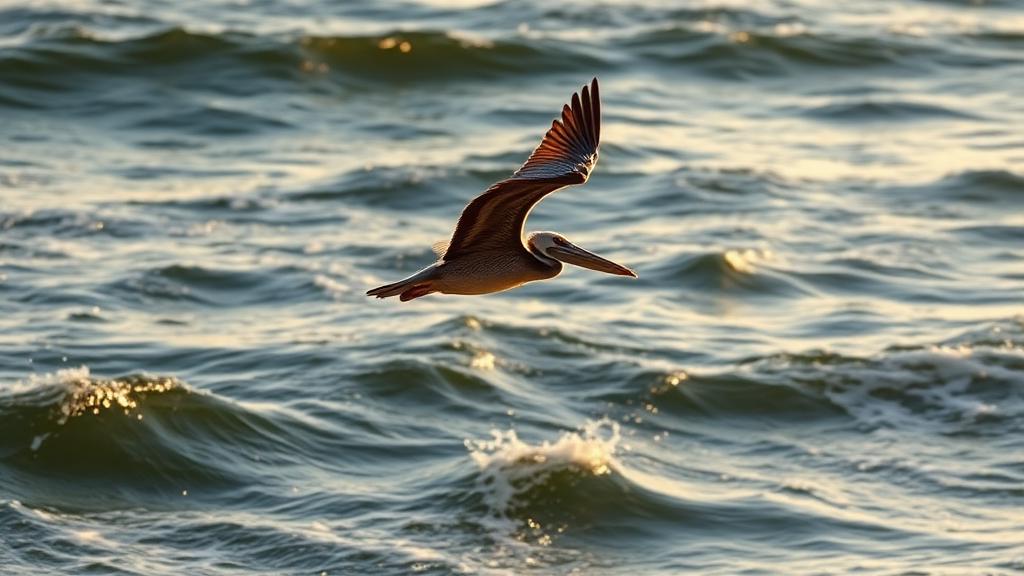 Year-round
Brown Pelican
Pelecanus occidentalis
The unmistakable icon of the California coast — squadrons glide inches above the swell in perfect single file before plunging headlong after anchovies.
Where: Anywhere along the open coast; reliable from any pier.
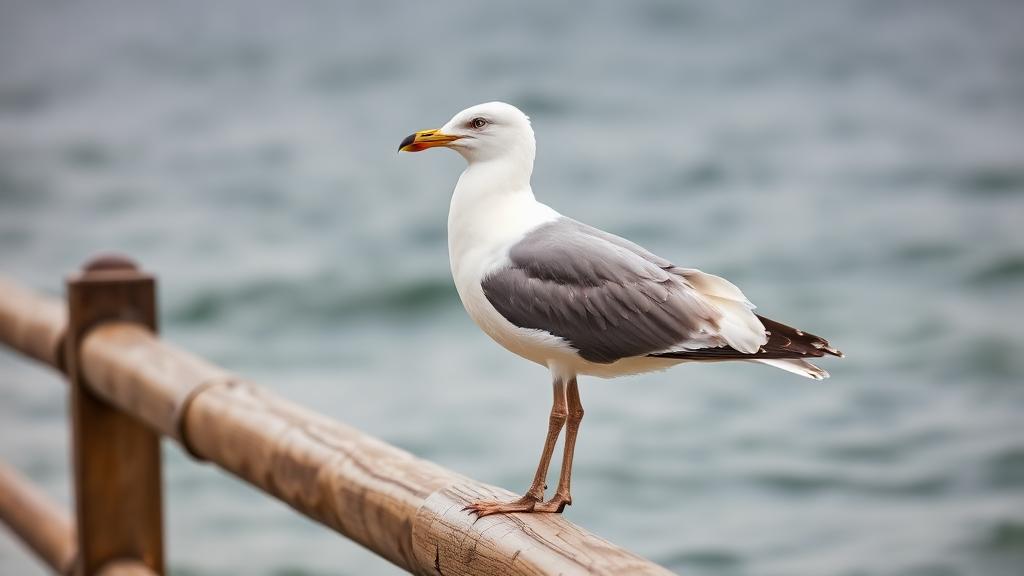 Year-round
Western Gull
Larus occidentalis
The big, bold local — pure white head, slate-grey back, and a yellow bill with a red dot. The boardwalk regular that will absolutely steal your sandwich.
Where: Every beach, every parking lot, every pier railing.
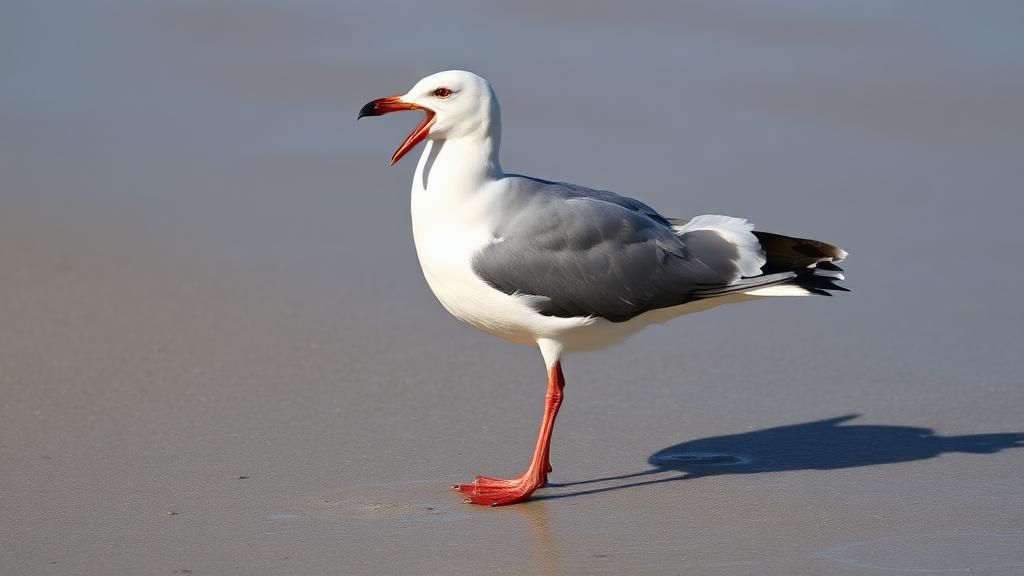 Winter visitor
Heermann's Gull
Larus heermanni
Easily the most beautiful gull on the coast — slate-grey body, snow-white head, and a vivid red bill. A post-breeding visitor from islands off Baja.
Where: Mixed in with Western Gulls, July through April.
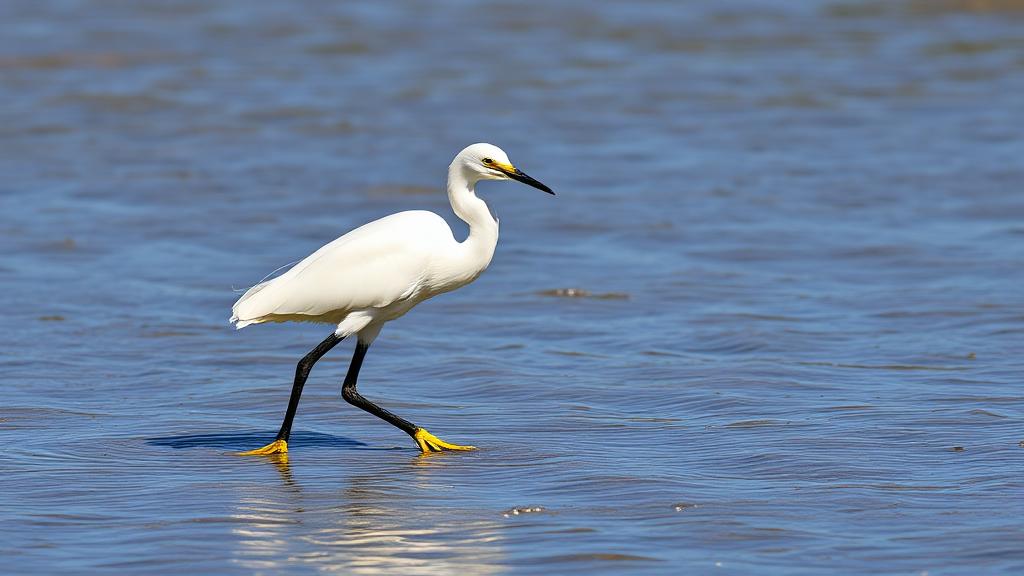 Year-round
Snowy Egret
Egretta thula
Brilliant white plumes, a dagger-black bill, and unmistakable yellow 'golden slippers' — stalks small fish in the shallows with a slow, deliberate prowl.
Where: San Elijo Lagoon, Tijuana Estuary, Children's Pool tide pools.
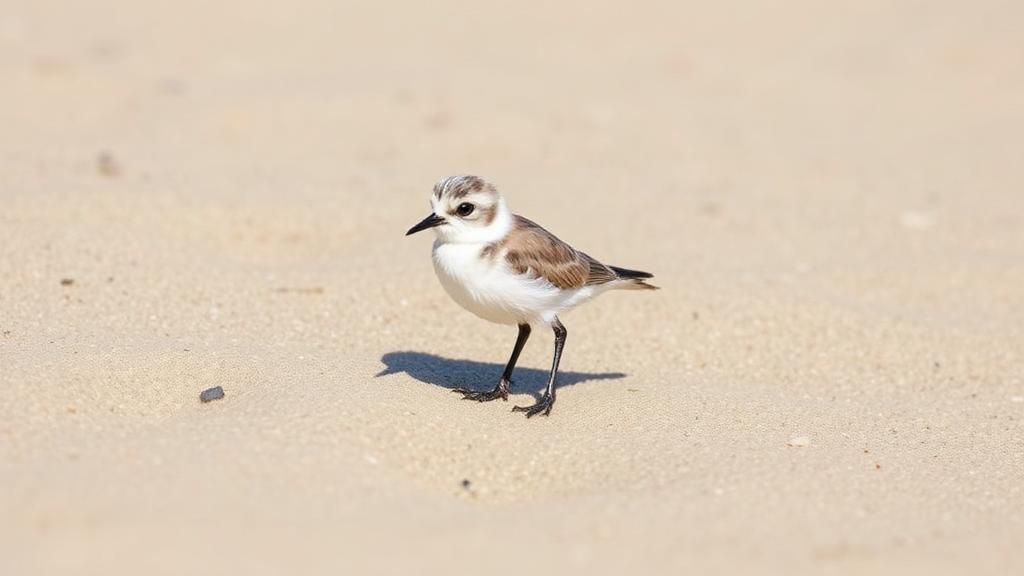 Year-round
Western Snowy Plover
Charadrius nivosus
A federally threatened, palm-sized shorebird that nests in shallow scrapes right on the open sand. If you see roped-off areas in spring, this is who they protect.
Where: Coronado, Silver Strand, and the north end of Imperial Beach.
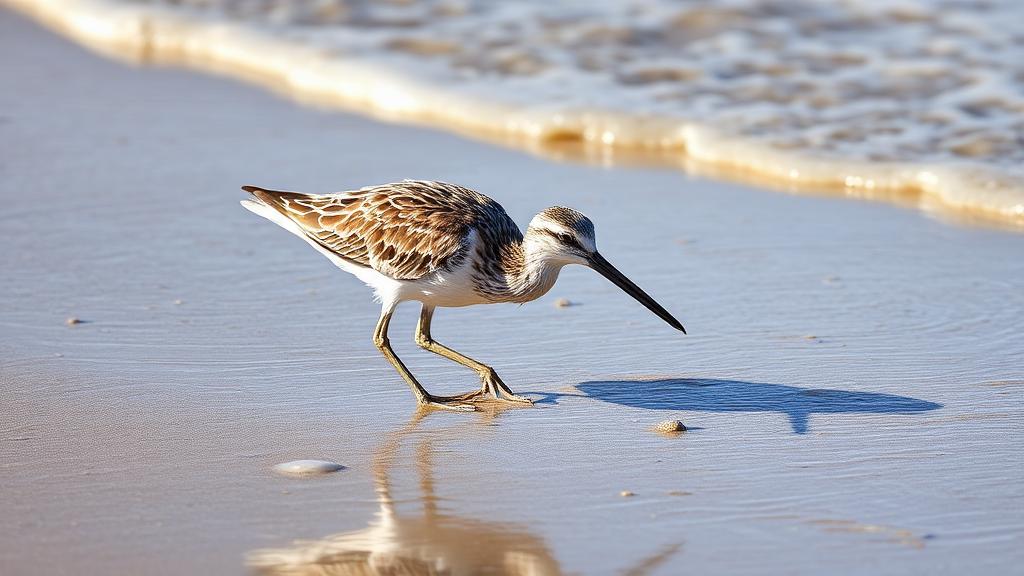 Winter visitor
Marbled Godwit
Limosa fedoa
A large cinnamon-buff shorebird with an absurdly long, slightly upturned bicolored bill — works the wet sand in deliberate, methodical sweeps.
Where: Mission Bay flats, Cardiff Reef, and any wide low-tide beach.
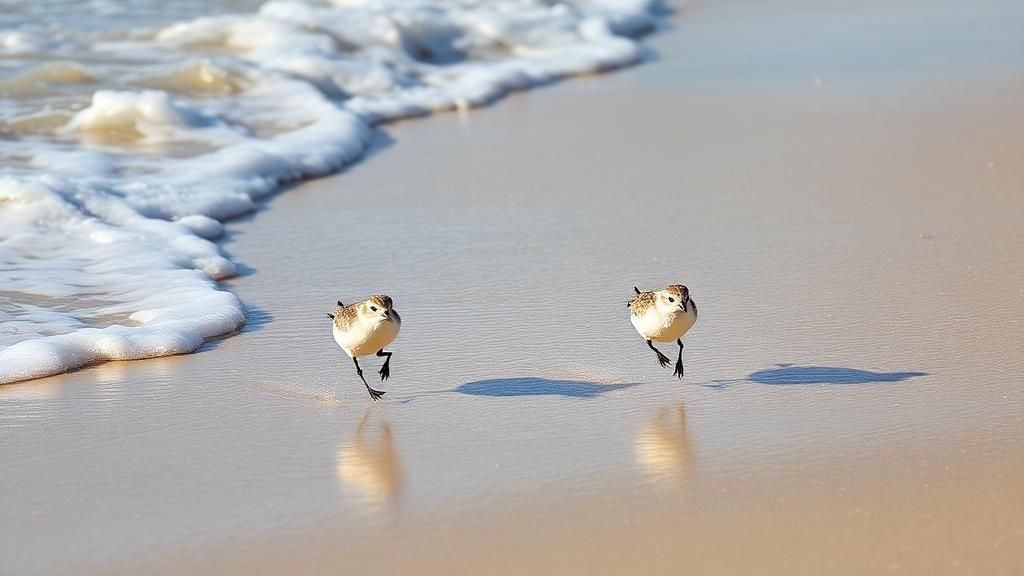 Winter visitor
Sanderling
Calidris alba
The wave-chasing wind-up toys — small flocks sprint up the beach as each wave recedes, probing for sand crabs in the seconds before the next set arrives.
Where: Every flat sandy beach in winter; especially Coronado and Pacific Beach.
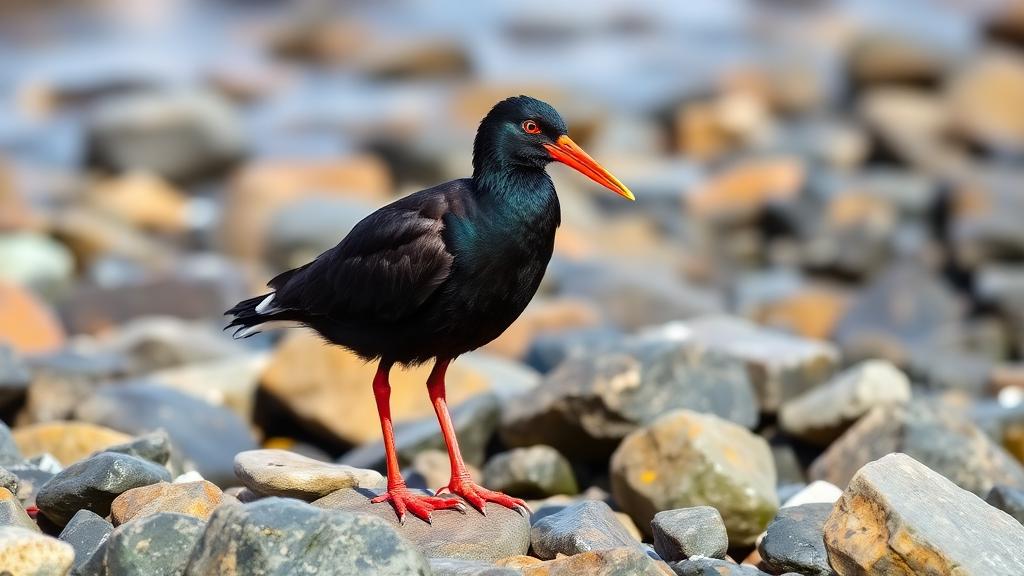 Year-round
Black Oystercatcher
Haematopus bachmani
All-black plumage, a fire-engine red bill, and pink legs — a noisy, conspicuous specialist of the rocky intertidal that pries limpets and mussels off the rocks.
Where: La Jolla cliffs, Cabrillo tide pools, Sunset Cliffs.
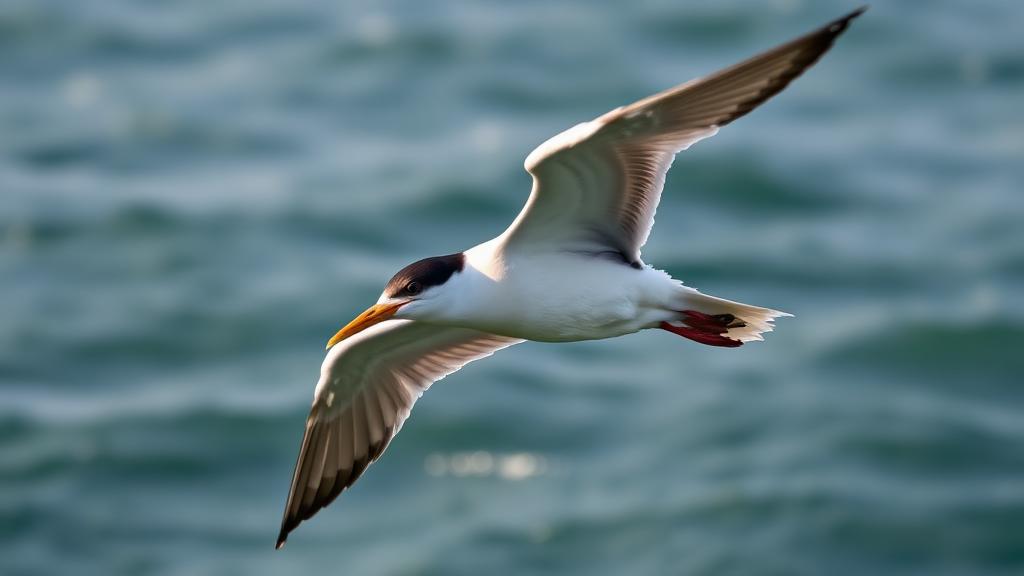 Summer breeder
Elegant Tern
Thalasseus elegans
Slim, fast, and aptly named — long orange bill, shaggy black crest. Hovers above the surf line and plunges for grunion and anchovies in spring and summer.
Where: Open coast and bay edges, March through October.
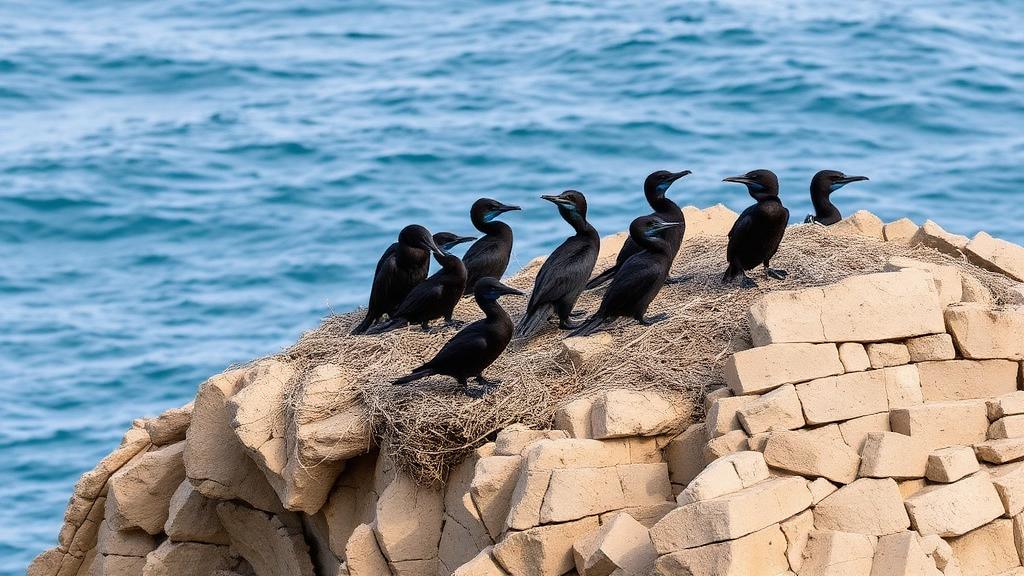 Year-round
Brandt's Cormorant
Urile penicillatus
Glossy black seabirds that nest shoulder-to-shoulder on the cliff ledges — in breeding season the throat patch turns electric cobalt blue.
Where: La Jolla Cove cliffs and the rocks below Children's Pool.
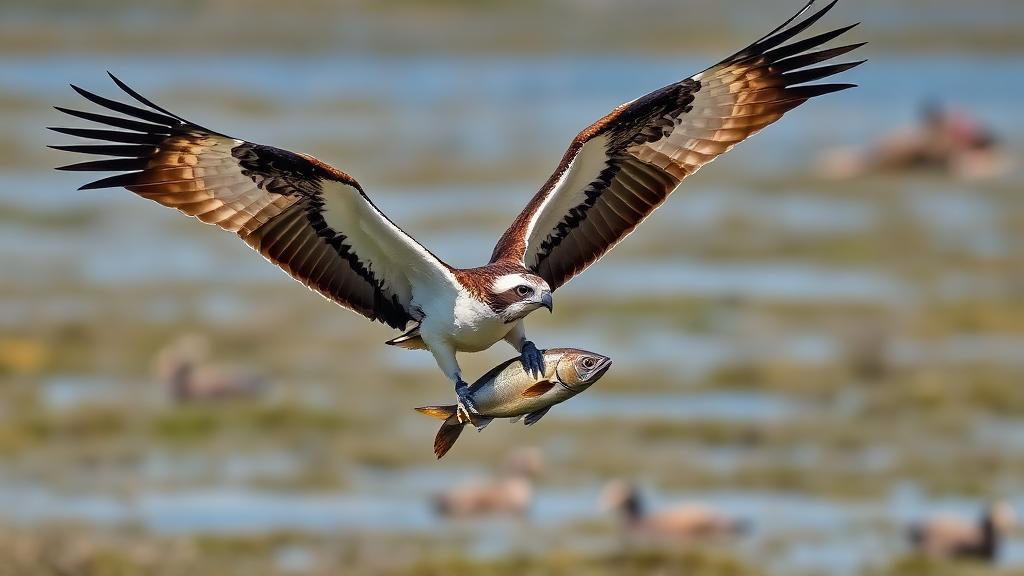 Year-round
Osprey
Pandion haliaetus
A fish-hawk with a six-foot wingspan — hovers high over open water, then folds and crashes feet-first to grab fish in its talons.
Where: Mission Bay, San Diego River mouth, San Elijo Lagoon.
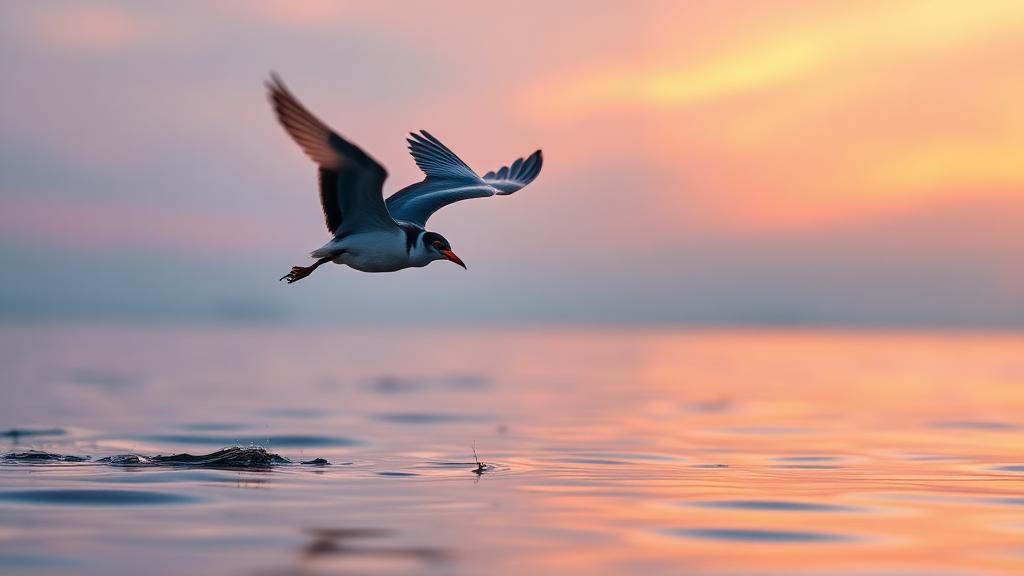 Summer breeder
Black Skimmer
Rynchops niger
Unmistakable — flies inches above the water with its longer lower mandible slicing the surface, snapping shut on anything it touches. A South Bay specialty.
Where: South San Diego Bay and the salt works at sunset.
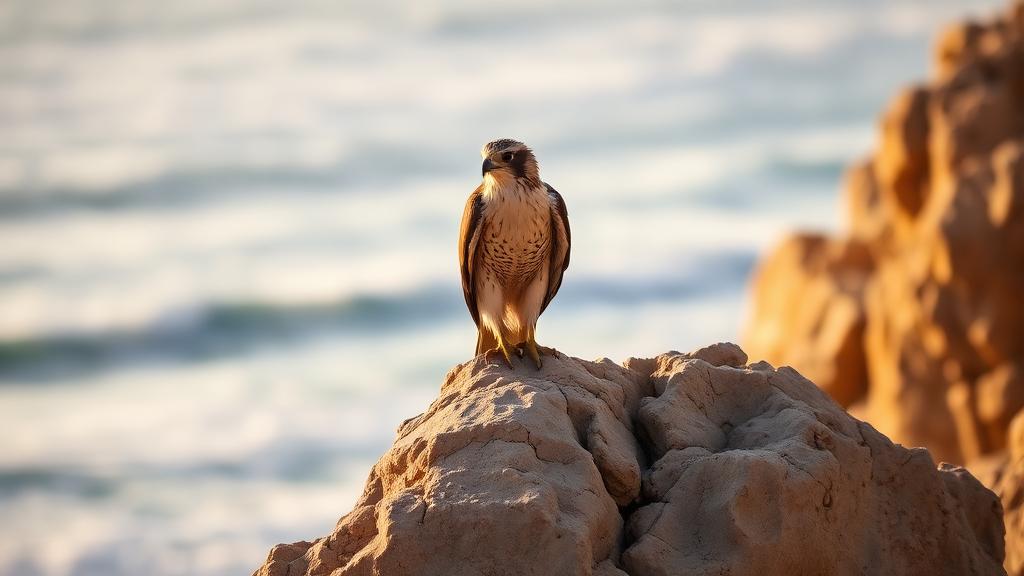 Year-round
Peregrine Falcon
Falco peregrinus
The fastest animal on earth — stoops from hundreds of feet up at over 200 mph to take pigeons and shorebirds in mid-air. Once nearly wiped out by DDT, now nesting again on San Diego's sandstone bluffs.
Where: Torrey Pines State Reserve cliffs, Sunset Cliffs, La Jolla bluffs.
Best spots for birding
Where to go, and which species to look for when you get there.
La Jolla Cove & Children's Pool
Brandt's Cormorants on the cliffs, Brown Pelicans overhead, and Black Oystercatchers working the rocks.
Torrey Pines State Reserve
Excellent for birds of prey — Peregrine Falcons hunt the sandstone bluffs above the Pacific.
San Elijo Lagoon & Tijuana Estuary
Prime water for Snowy Egrets, Marbled Godwits, and Ospreys hovering over the channels.
The county's best stretch for sand-nesting shorebirds, including the federally threatened Western Snowy Plover.
Birding etiquette
A few habits that keep these birds — and their nests — safe.
Give nesting plovers space
Stay 50+ feet from roped-off areas March–September. Snowy Plover chicks are nearly invisible against the sand.
Don't feed the gulls
Human food makes birds aggressive and sick. It's also illegal at many San Diego beaches.
Leash dogs near flocks
A single chase burns critical energy reserves. Off-leash zones (Dog Beach, north Coronado) are the exceptions.
Carry binoculars, not bait
8x42 binoculars and the tide chart will get you closer to wild behavior than any cracker ever could.
Know before you go
Plan it like a local
Watch the lifeguard flags
Green = calm, yellow = caution, red = strong currents, black = closed. The flags reflect today's conditions, not yesterday's. Always check at the tower before entering the water.
Mind the rip currents
Rip currents are the #1 ocean hazard in San Diego. If caught in one, swim parallel to shore until you're out of the pull, then back to the beach. Don't fight straight against it.
Avoid the 72-hour rain rule
After heavy rain, urban runoff carries bacteria into the surf. The County Beach & Bay Status site posts daily warnings — wait three days before swimming.
Arrive early on weekends
Lots near La Jolla Cove, Coronado, and Mission Beach typically fill by 10am from May to September. Aim for an 8am arrival, or take MTS bus routes 30 or 904.
Pack reef-safe sunscreen
California has banned several reef-damaging sunscreen ingredients. Look for mineral-based (zinc oxide, titanium dioxide) products to protect both your skin and the kelp forests offshore.
Bring a windbreaker
Onshore breezes can drop the perceived temperature by 10°F in the afternoon. A light layer turns a chilly walk back to the car into a pleasant one.
FAQ
Frequently asked
- What is the best beach in San Diego for first-time visitors?
- La Jolla Shores is the easiest first impression: a wide flat beach, gentle surf, lifeguards, paid parking nearby, and tide pools at low tide. Coronado is a strong second — wider sand, the Hotel del Coronado backdrop, and a long flat stretch perfect for walking.
- Can you swim at every San Diego beach?
- Most beaches are swimmable in summer, but conditions vary daily. Check the lifeguard flag system before getting in. Avoid swimming within 72 hours of heavy rain — runoff brings bacteria from inland watersheds. Sunset Cliffs and Point Loma are scenic but not safe swimming beaches due to rocks and surge.
- Where can I see tide pools in San Diego?
- The best tide pools are at Cabrillo National Monument (Point Loma), La Jolla Shores at the south end near the cliffs, and Sunset Cliffs at low tide. Always check the tide chart and aim for a tide of 0.0 ft or lower. Look but don't touch — most marine life is protected.
- Are San Diego beaches dog friendly?
- Dog Beach in Ocean Beach is the original off-leash beach and open 24 hours. Coronado has a leash-free section at the north end. Most other beaches allow leashed dogs only outside the 9am–6pm window in summer. Always check posted signs at the entrance.
- When is the best time of year to visit San Diego beaches?
- September and October offer the warmest water (around 68–70°F), thinner crowds after Labor Day, and the most reliable sun. June can be cloudy due to 'June Gloom' marine layer. Winter beaches are spectacular for walks and storm-watching but cool for swimming.
- Do San Diego beaches charge for parking?
- Most coastal lots are free but fill by 9–10am in summer. Paid lots near La Jolla Cove, Mission Beach, and Coronado run $2–4/hour. Street parking is metered in busy zones. Arrive early or use the MTS coastal bus routes for stress-free access.