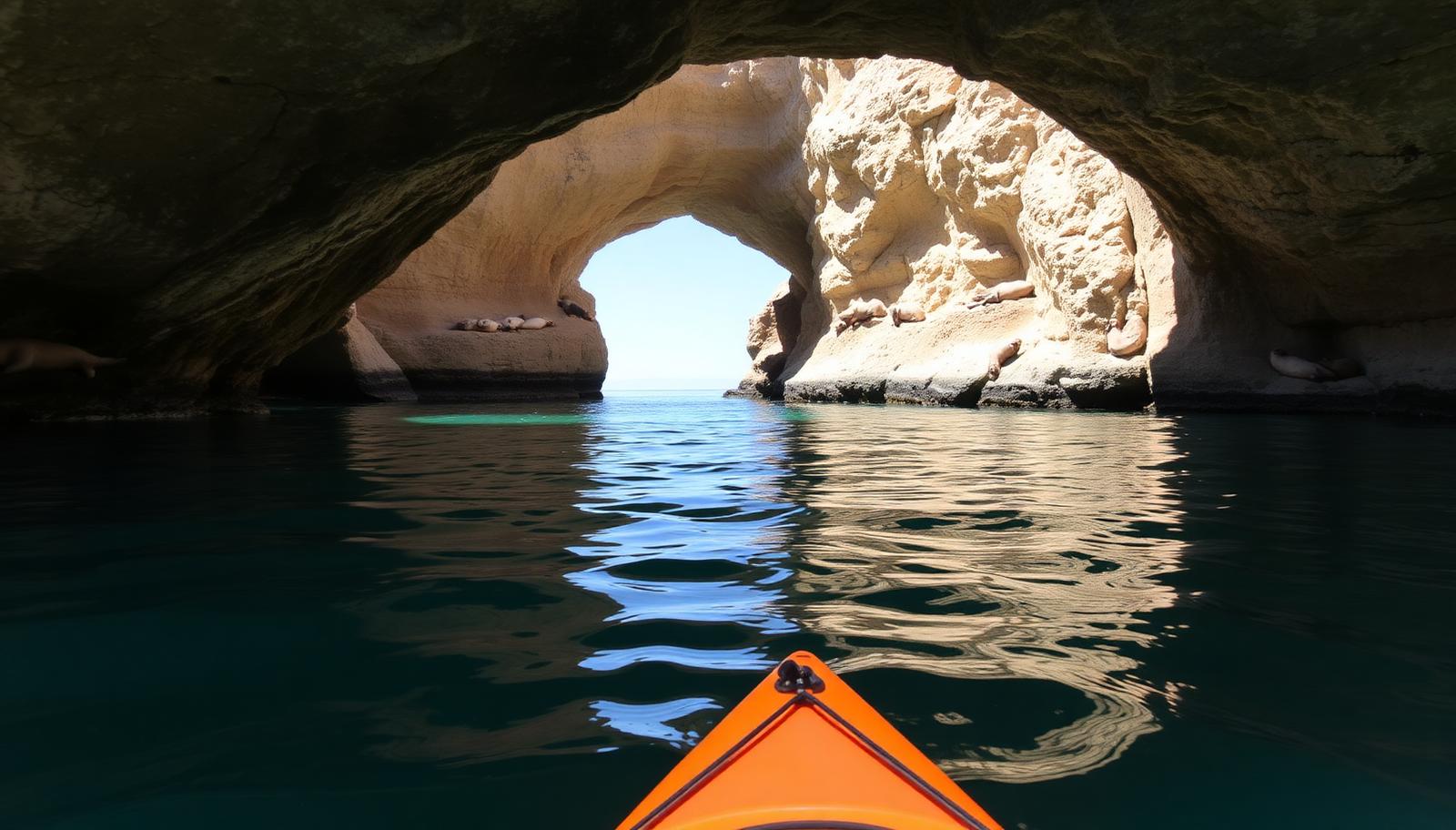
San Diego's coastline is carved by the Pacific into dramatic sandstone cliffs, and nowhere is this more evident than in its sea caves. From the historic tunnel of Sunny Jim's to the hidden cavern at Sunset Cliffs, these geological wonders offer a unique perspective on the California coast.
Sea caves at a glance
- Accessible:Sunny Jim's (Land), Sunset Cliffs (Low tide scramble)
- Water Access:The Seven Caves of La Jolla (Kayak, swim, or paddle)
- Best Tide:Minus tides for Sunset Cliffs; calm swell for all others
- Safety:Watch for surge and falling rocks; never enter alone
Sunny Jim's Cave (The Cave Store)
The most famous cave in San Diego is also the easiest to visit. Located inside The Cave Store at 1325 Coast Blvd, Sunny Jim's is the only sea cave in California that you can walk into from land.
In 1902, two Chinese laborers were hired to dig a tunnel from the shop above down into the cave. Today, you can pay a small fee to descend the 145 wooden steps. The cave is named "Sunny Jim" because the silhouette of the opening, when viewed from the inside, allegedly resembles the profile of a British cartoon character from the early 20th century.
- Location: La Jolla Village
- Access: Land-based tunnel/stairs
- Cost: Small admission fee (~$10 for adults)
- Good for: Families, photographers, and those who don't want to get wet.
La Jolla Cove sea caves
East of La Jolla Cove, the cliffs contain a series of seven distinct caves. While Sunny Jim is the only land-accessible one, the others — including Clam's Cave, Arch Cave, and Sea Surprize — are staples of the local coastline.
These caves are located within the Matlahuayl State Marine Reserve. This means the area is teeming with life, from Garibaldi to sea lions, but it also means the environment is strictly protected. You might be interested in our guide to snorkeling La Jolla Cove or exploring the nearby La Jolla tide pools.
Sunset Cliffs sea cave
Located at the northern end of Sunset Cliffs Natural Park, this "hidden" sea cave is a local favorite but significantly more dangerous than those in La Jolla.
Access is only possible during very low "minus" tides. Even then, it requires a scramble over wet, slippery rocks and around a cliff point. The bluffs here are notoriously unstable; stay away from the edges and watch for falling debris. Check our tide chart before attempting this.
Kayak-accessible caves
To see the Seven Caves properly, a kayak is the best tool. Guided tours depart daily from La Jolla Shores. These tours are the safest way to enter the caves, as guides know the daily swell conditions and which caves are safe to enter.
Entering a sea cave on a kayak requires timing the sets of waves. If you go on your own, be extremely cautious of the "surge" inside the cave, which can slam a kayak against the ceiling or walls. For more ideas on what to do in the area, see our things to do in La Jolla guide.
Comparison of San Diego Sea Caves
| Cave Name | Location | Access | Best Tide | Difficulty | Cost |
|---|---|---|---|---|---|
| Sunny Jim's | La Jolla Village | Tunnel/Stairs | Any | Easy | Paid |
| Seven Caves | La Jolla Cove | Kayak/Swim | Mid-Low | Moderate | Free* |
| Sunset Cliffs | Ocean Beach | Scramble | Minus Tide | Hard | Free |
*Free to visit, but kayak rentals or tours have a cost.
Tides & timing
Tides are the single most important factor for sea cave safety. For land-access caves like Sunset Cliffs, a tide below 0.0 ft is generally required. For kayaking, a lower tide makes the caves more visible, but a very high tide might make the entrances too small to enter safely.
Always check the La Jolla tide predictions before heading out. If you are interested in coastal exploration, you should also read our guide to the best tide pools and our general tide pooling guide.
Safety & conservation
Sea caves are dynamic environments. Rocks fall, tides rise, and swells can change in minutes.
- Never enter alone: Always have a partner.
- Watch the swell: Even on low-tide days, a large northwest swell can make caves death traps.
- Protective gear: If scrambling, wear shoes with grip. If kayaking, always wear your PFD.
- Respect the Reserve: Do not touch the walls or wildlife. The La Jolla caves are part of a protected marine area managed by the state park system.
Frequently Asked
- Can you visit San Diego sea caves without a kayak?
- Yes. Sunny Jim's Cave is accessible by land through The Cave Store's tunnel. The Sunset Cliffs sea cave can be reached on foot during very low tides, though it requires a difficult scramble. The other Seven Caves in La Jolla are generally only accessible by water (kayak, swim, or paddleboard).
- What is Sunny Jim's Cave?
- It is the only sea cave in California accessible by land. Located inside The Cave Store in La Jolla Village, a 145-step wooden staircase built in 1902 leads down through a man-made tunnel to a viewing platform inside the cave.
- Are the La Jolla sea caves safe to swim into?
- Only under very calm conditions and generally for experienced swimmers. Surge, swell, and sharp rocks make entering caves dangerous. Most visitors should use a guided kayak tour, which monitors daily ocean conditions for safety.
- When is the best tide for visiting sea caves?
- For land-accessible caves like Sunset Cliffs, you need a 'minus tide' (lower than 0.0 ft). For kayak-accessible caves, a mid-to-low tide is often best to see the cave structures, but high tides can sometimes allow deeper entry if the swell is very small.
- Are sea caves in San Diego protected?
- Yes. The La Jolla sea caves are part of the Matlahuayl State Marine Reserve. It is illegal to remove anything (shells, rocks, animals) or disturb the wildlife. Vandalism or graffiti in the caves is strictly prohibited and heavily fined.
- What should I wear to explore sea caves?
- For Sunny Jim's, standard walking shoes are fine but the steps can be slippery. For Sunset Cliffs, wear sturdy water shoes with good grip for wet rocks. For kayaking, wear swimwear or quick-dry clothing and a life vest (provided by tours).